
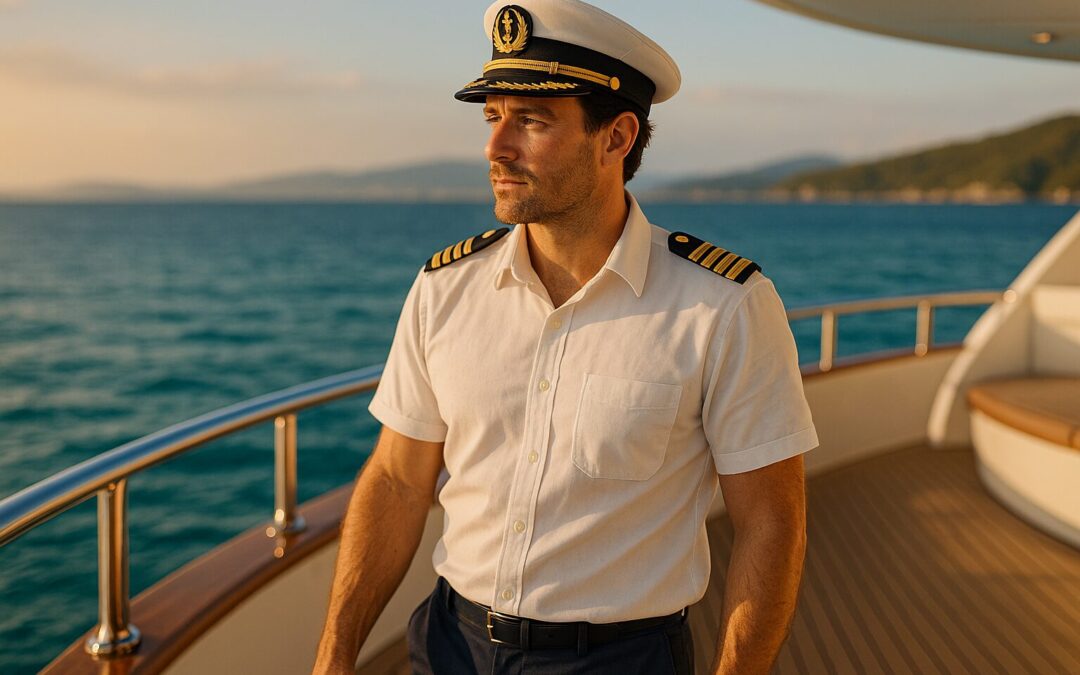
Imagine that you’re at the helm of a sleek yacht, the sea stretches endlessly around you, and the sun glints off the water as you set a course for a distant harbor. Learning how to become a yacht captain isn’t just about steering a boat; it’s about leadership, adventure, and the privilege of hosting unforgettable experiences for guests onboard.
It’s demanding work, but for those of us who’ve felt the pull of the ocean, it’s one of the most rewarding careers in the world.
This guide by Certified Training walks you through every step of the journey, from your first job on deck to commanding your vessel. We’ll share the maritime training you need, the career ladder you’ll climb, and what life at the helm is really like.
What Does a Yacht Captain Do?
A yacht captain is more than just a skilled navigator. Our responsibilities include not only planning routes and keeping everyone safe, but also leading crew management, overseeing vessel documentation, handling paperwork, and ensuring guests feel at home.
We are responsible for the safety of all onboard, effective crew management, and strict compliance with maritime regulations.
On any given day, we might be plotting a course through tricky weather, troubleshooting an engine issue, or arranging a last-minute shore excursion. The role blends technical know-how, interpersonal skills, and basic seamanship with the ability to adapt quickly.
The Skills That Make a Great Captain
To succeed, you’ll need:
- Leadership under pressure – crews look to us when things get tough.
- Deep maritime knowledge – from laws to navigation.
- Mechanical and technical skills – yachts are floating machines.
- Clear, calm communication – especially when the unexpected happens.
- Budgeting, voyage planning, and problem-solving.
It’s also highly recommended to develop strong social responsibility, first aid practices, and sea survival knowledge.
How We Get There: From Deckhand to Captain
Most captains start at the very bottom. The usual path looks like this:
- Deckhand or Junior Steward(ess) – cleaning, maintenance, guest service.
- Bosun or Lead Deckhand – running deck operations and tenders.
- Mate/OOW – helping with navigation, meeting coast guard requirements, and bridge watches.
- Chief Officer – managing the crew, safety drills, and other vessels.
- Captain – taking ultimate responsibility for the yacht.
At each stage, there are various job opportunities within the yachting industry, allowing individuals to gain experience and progress through different roles.
Climbing these ranks can take many years, depending on opportunities, dedication, and the required amount of sea service.
The Training and Licenses You’ll Need
STCW Basic Safety Training – This is your first step, covering safety, first aid, firefighting, survival, and personal safety. Basic training is a mandatory requirement for aspiring yacht captains before they can secure employment onboard.
Royal Yachting Association certifications – From a coastal license to the yachtmaster offshore certificate or yachtmaster ocean, these are solid starting points. An RYA certificate is essential to qualify for many jobs. To become qualified to operate yachts commercially, you must meet specific qualifications, including sea-time experience and passing the required exams.
MCA Certificates of Competence – Including OOW, Master 500, and Master 3000 master modules. These certificates are part of the qualifications needed for a captain’s credential.
USCG Captain’s License – Meeting Coast Guard and domestic waters regulations for uninspected vessels, a captain’s license is required to operate commercial vessels legally. The captain’s responsibilities and qualifications include demonstrating competence, meeting sea service requirements, and passing examinations to be officially recognized as a qualified captain.
Additional courses may include sailing endorsements, commercial vessel training, GMDSS, HELM, advanced firefighting, and yachting courses offered by a training center or superyacht training academy. To obtain a sailing endorsement, you need sailing experience and must log sea service hours on sail or auxiliary sail vessels.
Logging Your Sea Service
Every qualification needs proof that you’ve completed verified sea service. This means:
- Keeping official logbooks.
- Getting every trip signed by the captain or management.
- Meeting the required amount of sea time for each certificate.
Generally speaking, your logbook is your career passport; keep it spotless.
The Exam Process
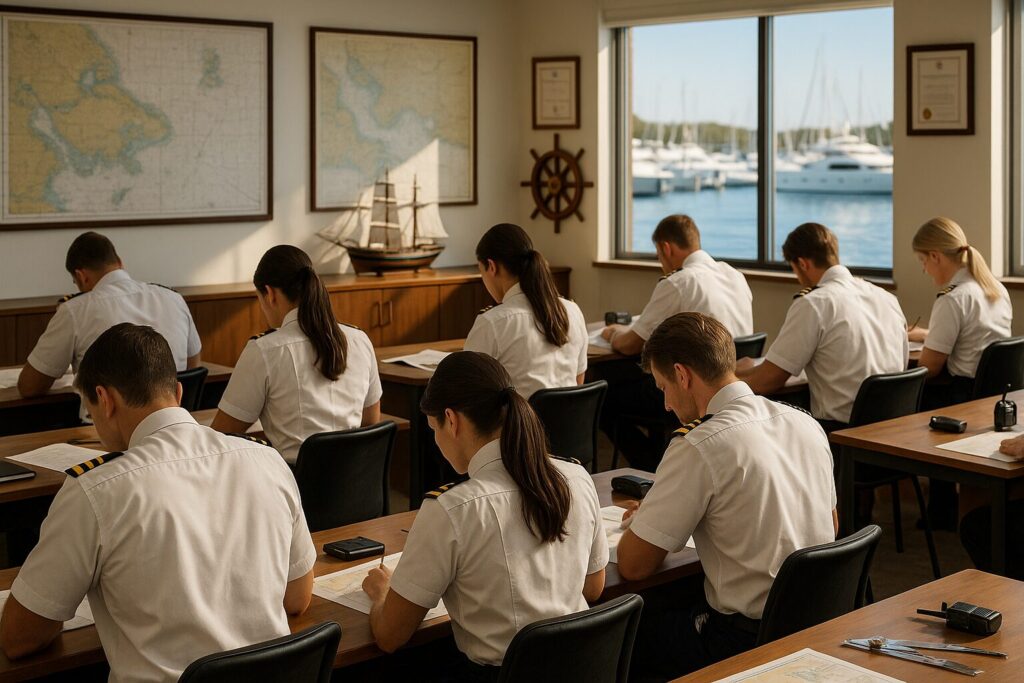
Expect written tests and an oral exam on navigation, weather, maritime law, and ship stability. Staying organized with current medicals, certificates, and logs will help you qualify smoothly.
To increase your chances of success, prepare thoroughly for both the written and oral exams by reviewing all course materials and practicing your practical skills.
Picking Your License Level
- OOW (Yachts) – First step for mates.
- Master 500 – For yachts up to 500 GT.
- Master 3000 – For yachts up to 3000 GT.
- Unlimited License – For the largest yachts or commercial ships.
The number of passengers you intend to carry also determines the license required; for example, the OUPV (6-pack) license allows you to operate vessels with up to six passengers, while carrying more than six passengers requires a Master license.
The bigger your goal, the more experience, training, and certification you’ll need.
What Life as a Captain is Really Like
Yes, there are jaw-dropping destinations, incredible meals, and a sense of adventure. Whilst the rewards are unforgettable, captains also work onboard for long days, spend months away from inland waters and home, and are constantly on call. Work-life balance can blur.
You’ll experience:
- Remote islands and glamorous ports.
- A close-knit crew.
- The thrill of navigating a multi-million-dollar vessel for owners and guests.
What You Can Earn
Average monthly salaries:
- Under 30m: $6,000–$8,000
- 30–50m: $8,000–$12,000
- 50–70m: $12,000–$18,000
- 70m+: $18,000–$25,000+
Plus: tips, bonuses, flights, insurance, and sometimes a rotation schedule.
Tips to Reach the Top
- Network at yacht shows and through crew agencies.
- Keep impeccable logs and references.
- Stay current on training and industry updates.
- Develop interpersonal skills; diplomacy is key.
- Go the extra mile; gain experience on different types of boats and vessels.
- Consider enrolling in a STCW course in Cape Town or an STCW basic safety training; check stcw course price in Cape Town or stcw course price to budget.
Your First Step to the Bridge
Start with STCW training, get your first job in the industry, log every sea mile, and work your way up. Every captain started somewhere; yours starts the moment you set your goal.