

Let’s be honest for a second. When you’re dreaming about your new life in the yachting industry, picturing yourself crossing the Atlantic, exploring the Med, or docking in St. Barts, you probably aren’t daydreaming about bacteria.
You’re thinking about the tax-free salary, the travel, and the camaraderie. You definitely aren’t thinking about the optimal temperature for storing raw chicken or how to properly sanitize an ice scoop.
But here is the reality check we give all our students at Certified Superyacht Academy: that “unglamorous” side of the job is what keeps the dream afloat. Food safety is the silent backbone of the superyacht industry.
You could be on a 100-meter vessel with gold taps and a helicopter pad, but if the hygiene standards slip, the whole operation can come crashing down in a matter of hours.
Navigating the sea of certifications can feel like learning a new language, especially when you are just starting here in South Africa and looking to make the move overseas. “Do I really need this?” “Is it just for chefs?” “Can I just do a quick quiz online?”
We hear these questions every single day at our training center in Cape Town. So, we’ve stripped away the jargon to give you the ultimate, honest guide to the MCA Food Hygiene Course.
It’s important to understand that maintaining high food hygiene standards and completing the MCA Food Hygiene Course in South Africa requires hard work and dedication.
What is the MCA Food Hygiene Course?
In simple terms, this is your license to handle food safely at sea, providing essential guidance for maintaining food safety standards on board.
Technically speaking, it is a specialized certification mandated by the Maritime and Coastguard Agency (MCA). While the MCA is a UK body, its standards are the “gold standard” globally. Whether you end up on a boat flagged in the Cayman Islands, Malta, or the Marshall Islands, this certificate is recognized and respected.
It aligns directly with the Maritime Labour Convention, 2006 (MLC 2006). You’ll hear us talk about the MLC a lot during your training; it’s essentially the “Seafarers’ Bill of Rights.” One of the key pillars of the MLC is ensuring that the food and water provided to crew and guests are safe, nutritious, and handled correctly.
But let’s look at it from a practical angle. You are working in a confined environment. If one person gets sick on a yacht, everyone gets sick. Norovirus (the “winter vomiting bug”) can tear through a crew mess faster than gossip. This course isn’t just about ticking a box for the government; it’s about making sure you don’t accidentally poison your Captain, the owner, or your fellow deckhands.
Which Crew Members Are Required to Take This Course?
There is a massive misconception floating around the docks (and online forums) that food hygiene is solely the chef’s problem. We’ve had plenty of students walk through our doors saying, “I’m just going to be a stew,” or “I’m working on deck, I don’t cook.”
Here is the thing: the lines on a superyacht are blurry.
Beyond the Galley
Obviously, the Head Chef and Sous Chef need advanced qualifications (Level 3 or 4). But the Level 2 Award in Food Safety is the baseline for almost everyone else. If your role involves food or drink in any capacity, you are legally a “food handler.”
Stewardesses and Stewards
If you are aiming for an interior role, this qualification is non-negotiable. Think about your daily duties. You are:
- Slicing lemons for gin and tonics.
- Plating up hors d’oeuvres for a cocktail party.
- Polishing cutlery that goes into guests’ mouths.
- Handling ice constantly.
Every time you scoop ice into a glass, you are handling food. If you haven’t washed your hands properly, or if you scoop the ice with a glass instead of a scoop (a huge no-no!), You are introducing risk.
General Crew and Deckhands
We also highly recommend this training for the deck crew. Why? Because on a busy charter, it is “all hands on deck.” You might be asked to help plate up during a massive party, run plates to the sun deck, or man the BBQ. In those moments, you are responsible for food safety. Ignorance isn’t a defense if a guest gets ill because you used the same tongs for the raw burgers and the cooked buns.
What Topics Are Covered in the Level 2 Syllabus?
We know that “syllabus” sounds dry, but the content of the Highfield Level 2 Award in Food Safety is actually fascinating (and a little bit gross, which makes it memorable). It’s designed to give you the “why” behind the rules.
Section 3.3 (Contamination Types) covers the different types of contamination, such as physical, chemical, and biological. For example, a physical contaminant could be a piece of glass accidentally falling into food, which highlights the importance of proper food handling and inspection.
Section 3.4 (Personal Hygiene and Pest Control) explains the importance of personal hygiene and pest management. The MCA food hygiene course covers specific control measures for preventing pest infestations and ensuring personal hygiene, such as regular handwashing, use of protective clothing, and proper waste disposal.
Microbiology 101: Know Your Enemy
We start by getting to know the bad guys: bacteria, viruses, mould, and fungi. We learn what they need to survive: food, warmth, moisture, and time, and how to starve them. You’ll learn why Salmonella and E. coli are such threats and how easily they spread.
The “Danger Zone”
This is a term you will never forget. The Danger Zone is the temperature range where bacteria multiply like crazy, typically between 5°C and 63°C. On a yacht, keeping food out of this zone is a constant battle.
You’ve got provisions sitting on a hot dock in Antigua waiting to be loaded, or a buffet lunch sitting out on the aft deck in the Mediterranean sun. We teach you the strict time limits for food service to ensure safety.
Contamination Types
We break contamination down into three scary categories:
- Physical: This is stuff that physically falls into food. Hair (gross), glass (dangerous), staples from packaging, or even bits of plastic. For example, a piece of glass from a broken light bulb could accidentally end up in a salad, posing a serious risk to anyone who eats it.
- Chemical: Cleaning products are everywhere on a yacht. If you spray surface cleaner too close to the buffet, you’ve just chemically contaminated the food.
- Allergenic: This is huge right now. You need to know the 14 major allergens and how to ensure a guest with a nut allergy doesn’t end up in anaphylactic shock because you used the wrong knife.
Personal Hygiene and Pest Control
We also cover the human element. You might think you know how to wash your hands, but we teach you the surgical way to do it. We also discuss reporting illnesses. If you have an upset stomach, you cannot be near food.
Period. And then there are pests. Cockroaches and rodents love ships. The MCA food hygiene course teaches control measures for preventing pest infestations and ensuring personal hygiene, including how to spot the early warning signs so you can alert the engineer or captain before it becomes an infestation.
Food Storage and Hygiene at Sea
When you’re working on a yacht, food safety isn’t just about what happens in the galley; it starts the moment provisions are brought on board and continues through every stage of storage, preparation, and service.
Proper food storage and hygiene practices are essential for keeping everyone healthy at sea, especially in the close quarters of the yachting industry.
Maintaining the right food safety level means paying close attention to how and where food is stored. On board ships, refrigeration and freezing facilities must be up to scratch, as even a small lapse in temperature control can allow microbiological hazards to multiply.
That’s why food storage areas should always be clean, dry, and well-ventilated. Regular cleaning and disinfection of these spaces and all related equipment is a must; cross-contamination is a real risk in the confined environment of a yacht.
Food handlers need to be trained in basic food safety, including the importance of personal hygiene. Washing hands thoroughly and frequently, especially after handling raw food or touching potentially contaminated surfaces, is non-negotiable.
Crew should also be vigilant about keeping preparation areas tidy and reporting any issues with storage equipment immediately.
A robust HACCP system (Hazard Analysis and Critical Control Points) is the backbone of safe food operations on board. This system helps identify and control potential hazards throughout the whole process, from delivery to storage to serving.
The course content of any reputable food safety training, whether delivered in person, online, or via computer-based training, should cover these essentials, ensuring that every crew member knows how to keep food safe and hygienic.
Completing food safety training and earning a certificate isn’t just about ticking a box; it’s about understanding the importance of every step in the process. When everyone on board is trained and confident, you can trust that the food served is safe, and the risk of foodborne illness is kept to a minimum.
Food Safety in Specific Maritime Environments
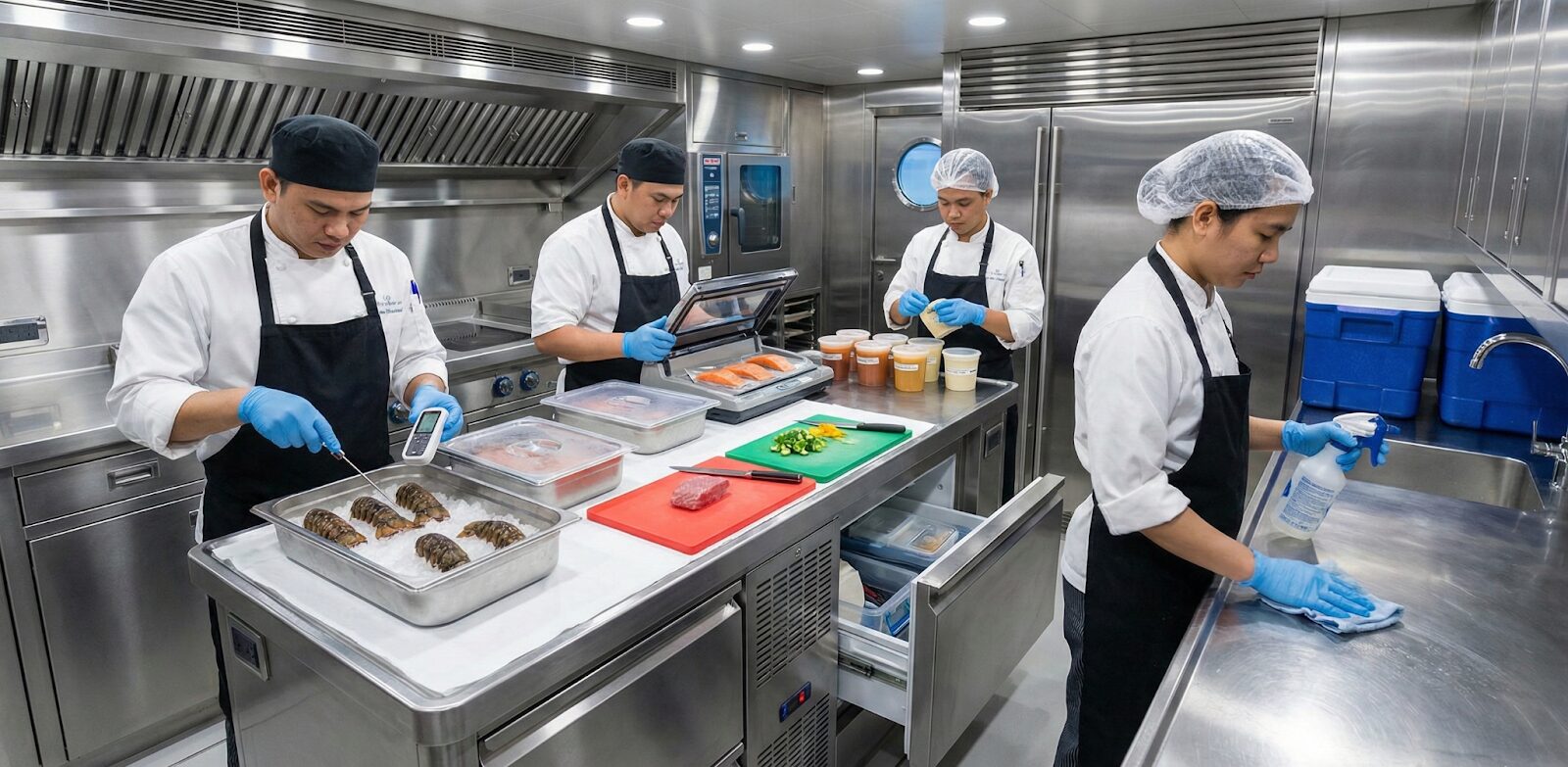
Food safety is a top priority across all types of vessels, from superyachts to cruise ships and ferries. In these unique maritime environments, food handlers face challenges that go beyond those found on land, making proper training and certification even more important.
The award in food safety and catering is a widely recognized qualification in the maritime industry, equipping food handlers with the knowledge they need to handle food safely, maintain high standards of food hygiene, and apply HACCP principles in their daily routines.
For yacht chefs and any crew involved in food handling, understanding how to store food correctly, prevent cross-contamination, and manage food operations efficiently is crucial.
Food safety training is not just a formality; it’s a vital part of keeping everyone on board healthy. Every crew member who handles food should complete a food safety course, whether they’re new crew or seasoned professionals.
Many training providers now offer online exam options and use engaging materials like PowerPoint presentations to deliver course content, making it easier than ever for yacht crew to get certified, even while at sea.
Stock control is another key aspect of food safety in the maritime industry. Crew must be trained to manage inventory, monitor expiry dates, and ensure that food is rotated properly to prevent spoilage and contamination. This is especially important on longer voyages, where resupplying isn’t always possible.
MCA-recognised food safety courses, such as those provided by Highfield Qualifications, are highly recommended; they cover everything from food hygiene to HACCP principles and are trusted by vessels around the world.
By completing a food safety course and earning a certificate, crew members demonstrate their commitment to safety and professionalism. This not only protects the health of everyone on board but also ensures compliance with industry regulations, making it an essential step for anyone working in maritime catering or food operations.
Can You Complete the MCA Food Hygiene Training Online?
This is the most common question we get asked at Certified Training. In the old days, you had to sit in a classroom for a full day.
Now, technology has made things easier, but there is a major catch you need to be aware of: the MCA Food Hygiene Course is not delivered solely online.
An in-person or proctored assessment is required to meet regulatory standards.
The Proctoring Rule
You cannot just Google “Food Hygiene Course,” pay $10, take a 20-minute unmonitored quiz, and expect a Captain to accept it. The MCA has very strict rules. To be valid for yachting, an online course must include a proctored (invigilated) exam.
This means that while you can study the modules at your own pace (on your laptop in your bunk, or at home in Cape Town before you fly out), the final exam is monitored via webcam. A real person or sophisticated AI monitors you to ensure you aren’t cheating or looking up answers.
Flexibility for Seafarers
At Certified Superyacht Academy, we love the flexibility this offers. It means you don’t have to burn a day of your leave sitting in a classroom if you don’t want to. You can get certified while you are waiting for your visa, or while you are in a crew house in Antibes looking for daywork.
Accreditation Matters
When you book with us or any provider, look for the Highfield logo. Highfield is the awarding body that is universally recognized by the MCA.
The HABC Highfield Awards in Food Safety are recognized by the MCA and are necessary for obtaining the Ship’s Cook Certificate. If you turn up to a boat with a certificate from “Bob’s Discount Online Training,” you will likely be sent back to shore to redo it properly.
How Does This Course Relate to the Ship’s Cook Certificate?
For those of you with a culinary background looking to transition from land to sea, this section is for you. The ship’s cook’s role is crucial onboard, and obtaining the necessary certification is a legal requirement for working in this position.
We see so many talented chefs come through our doors who are incredible cooks but don’t understand the maritime regulations yet.
Course certificates, such as the Ship’s Cook Certificate, are essential for demonstrating your competence and advancing in maritime catering roles. Food safety in catering is a key focus of the training and certification process, ensuring that those seeking the Ship’s Cook Certificate are fully prepared to meet industry standards and regulations.
The Essential Prerequisite
The Ship’s Cook Certificate is the holy grail for yacht chefs. Under MLC 2006, any vessel with 10 or more crew requires a certified ship’s cook. It’s a ticket to better pay and better boats. However, you cannot even apply for the Ship’s Cook Assessment without first holding a valid Level 2 Food Hygiene certificate.
Career Progression
Think of the Level 2 course as the foundation of your house. You can’t build the roof (the Ship’s Cook Cert) without a solid concrete slab. Even if you aren’t a chef, having this certificate on your CV signals to potential employers that you are serious.
It shows you understand the industry standards. If you are a stew aiming to become a Chief Stew or Purser one day, you will need this knowledge to manage your team and ensure the boat is compliant.
How Long Is the Certificate Valid For?
We see a lot of confusion around expiry dates. If you look at your Highfield certificate, you might notice there isn’t actually an expiry date printed on it. Do not let this fool you.
Note: While there is no printed expiry date, industry best practice for the mca food hygiene course requires regular refresher training to ensure ongoing compliance and up-to-date knowledge.
No Expiry vs. Industry Best Practice
While the paper doesn’t technically “expire,” the industry has a very strict standard. Port State Control officers and management companies expect you to refresh this training every 3 years. If you present a certificate that is 5 years old, it will likely be rejected.
Why Refresher Training is Vital
Why the 3-year rule? Because things change. Regulations are updated, new pathogens are discovered (hello, global pandemics), and frankly, humans get lazy. Bad habits creep in. Refreshing your training ensures you are sharp. It reminds you why we do things a certain way. Plus, from a liability standpoint, if a guest gets food poisoning and the crew’s certificates are all outdated, the boat is in serious legal trouble.
We always tell our crew: Be proactive. Don’t wait for the boat to tell you your cert is old. If you’re coming up on that 3-year mark, book a refresher. It makes you a much more attractive hire.
FAQs: What Our Students Ask Us
Do I really need a Food Hygiene certificate to work on a superyacht?
Technically, flag state laws vary, but practically? Yes. Almost all reputable yachts and management companies require it for Interior and Galley crew. It is becoming standard for Deck crew on larger vessels too. It’s a small investment that removes a barrier to being hired.
Is a Level 2 Food Hygiene certificate the same as a Level 3?
No. Level 2 is for “food handlers” (stews, deckhands, sous chefs). Level 3 is for “supervisors” (Head Chefs, Chief Stews). Level 3 goes much deeper into management systems like HACCP (Hazard Analysis and Critical Control Points). Start with Level 2.
Will a standard land-based food hygiene certificate be accepted?
It depends. If it is a Highfield or City & Guilds certificate with a proctored exam, usually yes. But generic “hospitality” certificates often don’t meet the specific MCA criteria. To be safe, always choose a course specifically marketed for seafarers or explicitly stating “MCA Approved.”
Is the MCA Food Hygiene Course part of STCW Basic Safety Training?
No, and this catches people out! STCW covers Fire Fighting, First Aid, Survival, and PSSR. Food Hygiene is a separate requirement under MLC 2006. You need both to be fully employable.
Does the course cover food allergies?
Absolutely. This is a massive part of the modern syllabus. You will learn how to handle gluten-free, dairy-free, and nut-free requirements safely.
Is this certificate recognized on non-UK-flagged vessels?
Yes. The MCA standard is so high that virtually every other flag state (Cayman, Marshall Islands, etc.) accepts it. It is the global passport for food safety.
Do I need to know English to take the MCA Food Hygiene course?
Yes, a working knowledge of written English is required to understand the course materials and complete the assessments.
Conclusion
Life on a yacht is fast-paced, demanding, and incredibly rewarding. At Certified Superyacht Academy, we’ve helped over 7,000 crew members launch their careers, and we know that the difference between a “greenie” and a pro is often in the details.
The MCA Food Hygiene Course is more than just a piece of paper. It’s the knowledge that keeps your crew healthy during a long Atlantic crossing. It’s the confidence to tell a guest, “I’m sorry, but I can’t serve that because it’s not safe,” and knowing you are right.
Whether you are here in Cape Town getting your very first qualifications or you’re an experienced yachtie looking to refresh your skills, this training is an investment in your professionalism.
So, don’t leave it until the last minute. Get your certification sorted, get that CV looking sharp (we can help with that too!), and get ready for the season ahead.
Ready to get certified? Check out our MCA Food Hygiene Course options at Certified Training. Whether you need the full course or a refresher, we’ve got you covered with the accredited training you need to work on the world’s best yachts.