

Imagine the feeling of the salt spray on your face and the raw power of a high-performance engine beneath you as you skim across the glass-like surface of a quiet bay. It is an exhilarating experience that offers a sense of freedom few other activities can match.
Riding jetskis is not only thrilling but also incredibly fun when done safely and responsibly, allowing you to fully enjoy the experience while prioritizing safety. However, that thrill comes with a significant responsibility to yourself, your passengers, and every other person sharing the water with you.
At Certified Training, we believe that the best days on the water are the ones where everyone returns to the dock safely and with a smile. That is why the Royal Yachting Association developed a comprehensive framework for yacht training. Whether you call it a jet ski, a Waverunner, or a Sea-Doo, mastering these machines requires more than just pulling a trigger and hanging on for dear life.
The RYA personal watercraft course is the gold standard for anyone looking to handle these craft with confidence. It isn’t just about learning to go fast; it’s about understanding the mechanics of the ocean and being aware of your own limitations as well as the capabilities of your PWC.
We are here to guide you through everything this course entails and why it might be the most important investment you make this season.
What Is a Personal Watercraft (PWC)?
To the uninitiated, a personal watercraft is often simply referred to by the brand name “Jet Ski.” In technical and legal terms, however, a pwc is defined as a vessel less than five meters in length that uses an internal combustion engine with a water jet pump as its primary source of propulsion.
They are designed to be operated by a person sitting, standing, or kneeling on, rather than inside, the hull.
We often describe them as the motorcycles of the sea. They are nimble, incredibly fast, and capable of operating in very shallow water. Because they lack a traditional propeller and rudder, they handle quite differently from a standard motorboat.
Understanding this distinction is vital for safety. Without a propeller, a personal watercraft loses almost all steering capability the moment the throttle is released. At Certified Training, we make it a priority to ensure every student understands that “no power means no steering,” a fundamental concept that saves lives.
Personal watercraft are suitable for a wide range of users, from beginners to experienced riders, due to their versatility and ease of use.
Why Was the RYA PWC Course Created?
As the popularity of personal watercraft exploded, so did the number of incidents on the water. We saw a growing need for a structured way to teach etiquette and safety to enthusiasts and professionals alike. The RYA stepped in to bridge the gap between “having a go” and being a truly competent mariner.
The course was designed to professionalize the sport and reduce friction between PWC users and other water users. Swimmers, sailors, and wildlife all share the coastline. We teach PWC operators how to coexist within that ecosystem without causing a nuisance or a hazard. The course also helps participants develop the skills and mindset needed for responsible PWC operations.
By establishing a national and international standard, the RYA provided a roadmap for skill progression. It moved the needle from reckless riding toward a culture of maritime competence. We are proud to see how this training has transformed the reputation of the PWC community over the years.
Who Should Take the RYA Jet Ski Course?
We find that the beauty of this RYA personal watercraft proficiency is its versatility. It isn’t just for one specific type of person; rather, it serves a broad spectrum of ocean enthusiasts. If you plan on being at the helm of a jet ski, this course is likely for you.
The course is also ideal for anyone planning to rent or use a PWC during a holiday, ensuring you can enjoy water activities safely and responsibly.
Beginners
If you have never touched a PWC before, we highly recommend starting here. Learning the right habits from day one is much easier than unlearning dangerous ones later. We provide a safe, controlled environment to make your first mistakes while gaining the skills needed to ride safely.
Superyacht Crew
For those looking to work on luxury vessels, this RYA certificate is non-negotiable. Most superyachts carry PWCs as toys for guests. We know from experience that captains will rarely hire deckhands who cannot legally supervise or operate these craft.
Jet Ski Owners
Buying a high-end PWC is a significant financial investment. Whether you are using a school boat or your own machine, we want to help you protect that investment. Knowledge of the machine prevents costly mechanical failures and ensures you are self-sufficient on the water.
Watersports Professionals
If you want to become a kitesurfing instructor or a flyboard operator, you’ll often use a PWC for safety and transport. We view this RYA personal course as the foundational driver’s license for the professional maritime world. It is a vital component of any broader yachting course.
Why Is the RYA PWC Certificate Important?
The personal watercraft proficiency certificate is more than just a piece of paper; it is proof of your commitment to safety. In many parts of the world, having this qualification is the difference between getting on the water and being turned away at the slipway.
Holding the certificate often grants access to launch sites, marinas, and training venues that require proof of competence. We see it as an essential part of a modern mariner’s toolkit.
Is the RYA PWC Certificate Required by Marinas or Harbours?
Yes, in an increasing number of locations, the answer is a firm yes. Many local authorities and any major UK harbour now mandate proof of competence before they allow you to launch. We have seen many disappointed riders turned away from popular coastal spots because they lacked certification.
Do Insurance Companies Require Jet Ski Certification?
Most reputable insurance providers will offer lower premiums to certified riders. Some may even refuse to cover you entirely if you cannot prove you have undergone formal training. We believe that being pro-safety is the best way to keep your insurance costs manageable.
Is the Certificate Recognised Internationally?
One of the greatest strengths of the RYA is its global reputation. The personal watercraft proficiency course is recognized by maritime authorities in dozens of countries. If you plan to rent a jet ski in the Mediterranean or work in the Caribbean, this certificate is your international passport.
What Will You Learn in the RYA Personal Watercraft Course?
The course will teach you essential skills for safe and confident personal watercraft operation. We structure the learning experience to be a practical course that prioritizes time on the water, ensuring you gain hands-on experience from the start.
Our training covers a comprehensive range of topics, including safety procedures, navigation, and effective handling techniques. The course helps you develop your skills, whether you are a complete beginner or looking to advance your abilities.
You will practice handling your craft at both high and low speeds, ensuring you can control your PWC safely and effectively in all situations.
What Safety Skills Are Covered?
Safety is the heartbeat of the syllabus. We place a heavy emphasis on essential safety information, such as the use of a kill cord. We also teach you how to recognize hazards that are invisible to the untrained eye, such as submerged rocks or shifting sandbars.
What Handling Skills Will You Learn?
Handling a PWC at 40 knots is easy; mastering low-speed riding skills in a crowded marina is where the true talent lies. We spend significant time on boat handling, docking, and recovery skills. You will also learn the mechanics of launching and recovering your craft from a trailer.
What Navigation Knowledge Is Included?
We don’t expect you to be a master navigator in one day, but we do give you the basics of passage planning. You will learn how to read a simple chart and how to plan a short journey. Most importantly, we cover collision avoidance and orientation at sea to ensure you remain safe.
Additionally, the RYA personal watercraft course in South Africa includes training in recovery skills, passage planning, helping you prepare for safe navigation and unexpected situations on the water.
What Is Included in the RYA PWC Course Syllabus?
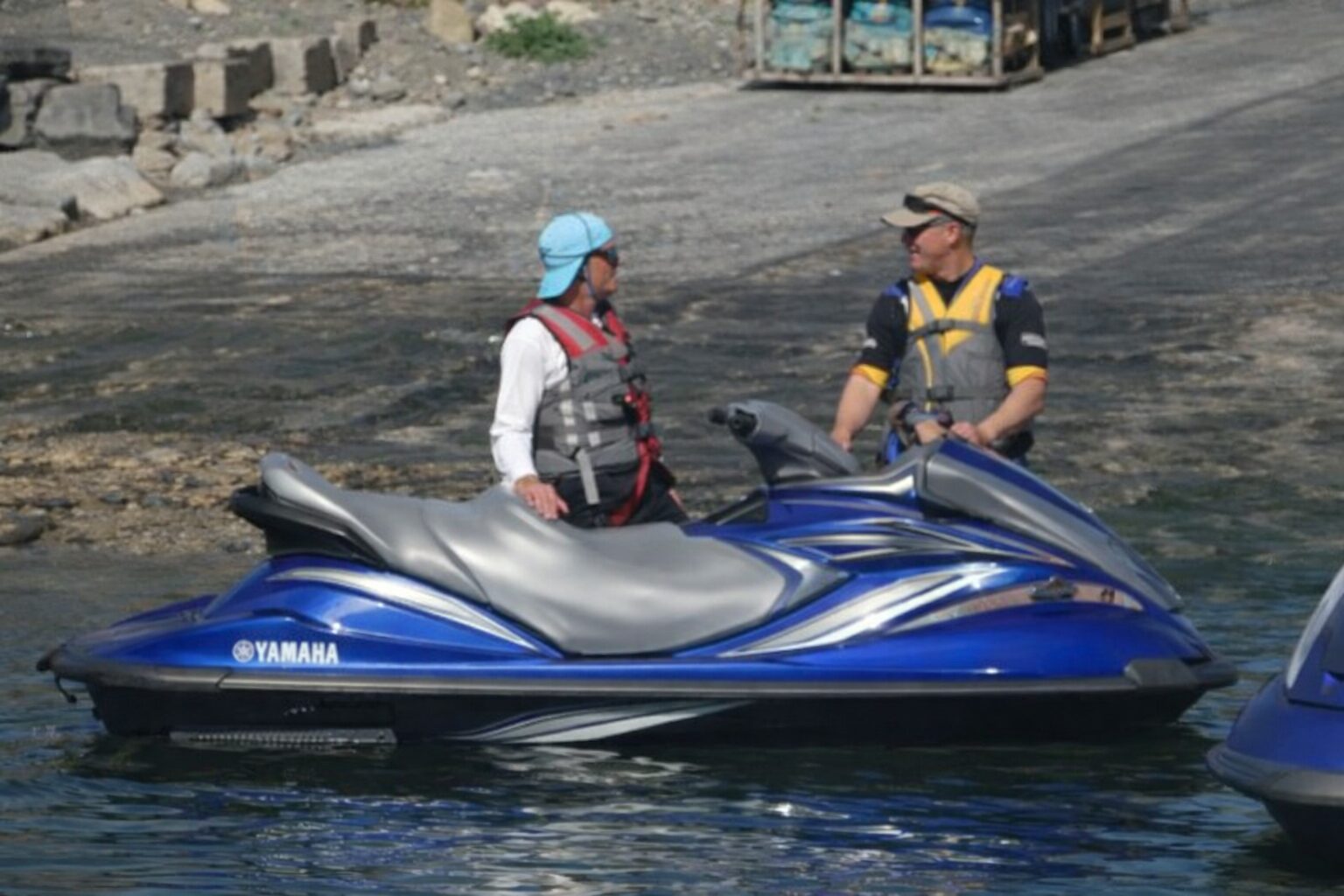
The syllabus is designed to be comprehensive yet accessible. We follow a logical flow that builds your confidence as the day progresses. Much of the theoretical framework is supported by the RYA Personal Watercraft Handbook, which serves as an excellent reference.
- Pre-launch checks: We teach you what to look for under the hood to ensure a trouble-free day.
- Equipment knowledge: From life jackets to flares, we cover what you need to carry.
- Tides and weather: We help you understand how the environment affects your ride.
- Collision avoidance: Understanding buoyage and collision regulations.
- Emergency procedures: What to do if the engine fails or someone goes overboard.
The syllabus is designed to ensure students achieve PWC proficiency, a recognized certification both nationally and internationally.
How Long Does the RYA Personal Watercraft Course Take?
Typically, the course is completed in a single, intensive day. We usually start around 9:00 AM and finish by late afternoon. Because our groups at Certified Training are small, we can cover a vast amount of ground in those eight hours.
Our RYA personal watercraft course is conducted at the perfect location, offering ideal conditions for learning and practicing PWC skills.
The day is fast-paced but highly rewarding for beginners and experienced riders alike. We find that students are often surprised by how much they have learned by the time the sun starts to set. It is a steep learning curve, but the expert training makes the information stick.
Are There Any Entry Requirements for the RYA PWC Course?
One of the best things about this training is that it is accessible to almost everyone. We don’t require you to have any prior maritime knowledge. However, there are a few basic guidelines to keep in mind before you book your spot.
What Is the Minimum Age?
The RYA sets the minimum age for this course at 12 years old. However, certificates for those under 16 are usually endorsed to show they must be under adult supervision. We love seeing young riders get a head start on their maritime education.
Do You Need Previous Experience?
Absolutely not. We welcome complete novices with open arms, as no previous experience is required. Our instructors are trained to adapt their teaching style to your current comfort level. Whether you are a total beginner or have been riding for years, we guarantee you will discover something new.
How Is the RYA PWC Course Assessed?
We understand that the word “exam” can be intimidating. You’ll be glad to know that there is no formal, sit-down written test at the end of the day. Instead, the assessment is continuous throughout the training.
Our chief instructor and staff observe your handling and recovery skills, your response to safety drills, and your understanding of the theory. If you show a safe attitude and a basic mastery of the skills, you will pass. We focus on competence, not just memorization.
What Certification Do You Receive After Completing the Course?
Upon successful completion, you will be awarded the RYA Personal Watercraft Proficiency Certificate. This is a plastic, credit-card-sized license that is easy to carry with you on the water. It is a recognized mark of quality worldwide.
Furthermore, this certificate can often be used to support an application for the international certificate of competence. If you intend to use a PWC in European inland or coastal waters, this is frequently a legal requirement. We can help you navigate that application process once your course is finished.
Can the RYA PWC Course Help Your Career?
For many of our students, this course is much more than a hobby, it’s a career move. The maritime industry is competitive, and having a diverse set of skills makes you a much more attractive candidate to employers.
Is It Useful for Superyacht Jobs?
On a superyacht, the deck team is responsible for all the toys. If a guest wants to go jet skiing, a crew member must be there to supervise. We have seen many junior deckhands get hired simply because they already held their RYA PWC qualification.
Does It Help with Watersports Instructor Careers?
If you are looking to become an instructor in other disciplines, being able to drive a PWC is a massive asset. It allows you to provide safety cover and move equipment efficiently. We consider it a force multiplier for your professional profile.
Can You Progress to Instructor Courses?
Once you have held your proficiency certificate for a certain period, you can take the instructor course. This allows you to teach others and turn your passion into a full-time job. We love seeing our students return to us to take that professional leap.
How Much Does the RYA PWC Course Cost?
The cost of the course can vary depending on the location and equipment. Generally, you can expect to pay around £250–£300 (or the local equivalent). While this might seem like a significant outlay for one day, we encourage you to look at the long-term value.
When you factor in the insurance discounts, the safety knowledge, and the career opportunities, the course pays for itself quite quickly. We often say that the cost of the course is much lower than the cost of a single major repair caused by improper handling.
What Should You Look for in an RYA Training Provider?
Not all training centers are created equal. When you are looking to book, we recommend doing a little bit of homework. Your experience will largely depend on the quality of the equipment and the expertise of the staff.
- Recognised Training Centre status: Always ensure the centre is officially recognized.
- Instructor experience: Ask how long the instructors have been riding and teaching.
- Equipment quality: Are the jet skis modern and well-maintained?
- Related courses: Look for a center that offers a first aid or STCW course in Cape Town for a complete package.
Frequently Asked Questions (FAQ)
Do I need to be a strong swimmer to take the course?
While you don’t need to be an Olympic athlete, we do require you to be comfortable in the water. You will be wearing a buoyancy aid, but being able to swim back to the craft is essential for safety.
How does this differ from the RYA Powerboat Level 2?
While both cover collision avoidance and orientation, the powerboat course focuses on traditional vessels. The PWC course is specifically designed for the unique jet-drive propulsion of a personal watercraft.
Can I bring my own machine?
Yes, many centers allow you to use your own machine, provided it is insured and in good working order. This is a great way to learn the specific handling and recovery skills of the craft you will be using most often.
Are there other skills I should learn?
We often suggest that experienced riders also look into a first aid certificate. Being prepared for emergencies beyond boat handling makes you a far more responsible member of the maritime community.
What are the good conditions for taking the course?
Good conditions for taking the course include calm weather and flat water. These conditions are ideal for learning and practicing new skills safely, as they help ensure both safety and optimal performance during your training sessions.
The water is calling, and there is no better way to answer it than with the skills and confidence that come from professional training. We want you to enjoy the thrill of the ride while knowing you have the competence to handle whatever the ocean throws your way.
Taking the RYA personal watercraft course is an investment in your safety, your career, and your future adventures. Whether you’re aiming for a job on a superyacht or just want to explore your local coastline, the team at Certified Training is ready to help you get there.