
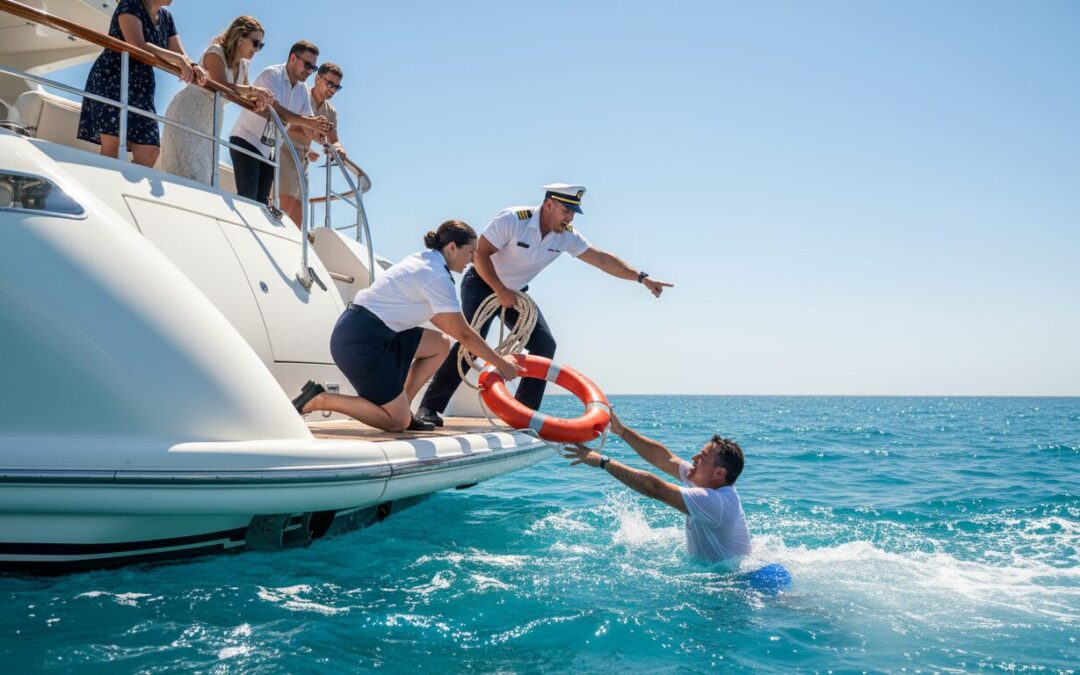
When emergencies strike at sea, every second counts. Whether it’s rescuing someone overboard, especially in ‘man overboard’ situations, responding to a vessel in distress, or carrying out a rapid evacuation, the ability to launch, handle, and recover a fast rescue boat safely can mean the difference between life and tragedy.
That’s where STCW fast rescue boat training comes in, an essential qualification that gives seafarers the proficiency, confidence, and calmness to perform time-critical rescue operations under pressure.
This fast rescue boat course isn’t just a formality; it’s a key part of being a capable and responsible mariner. Through realistic drills, teamwork, and advanced rescue techniques, it prepares deck crew and personnel to act swiftly and effectively when every second matters.
Understanding STCW Fast Rescue Boat Training
The STCW Fast Rescue Boat Training, officially known as proficiency in fast rescue boats, is part of the international STCW Code, the global standard that ensures competence and safety across the maritime industry.
Alongside the STCW Code, the SOLAS (Safety of Life at Sea) convention is another key international convention that governs safety and rescue requirements for seafarers. This program covers both theory and practical training to help participants learn how to launch, operate, and recover fast rescue boats designed to locate and recover persons in the water and assist distressed vessels.
Fast rescue boats are small, high-speed crafts built for quick deployment and maneuverability, even in challenging conditions. The course focuses on safety, command, and communication to ensure the crew can operate fast rescue boats effectively, even under adverse weather and rough sea conditions.
The purpose of this training is to ensure that participants can operate and recover fast rescue boats while taking into account environmental factors, prevailing weather, and operational risks. It also builds confidence in the use of signalling equipment, emergency equipment, and casualty recovery procedures.
STCW Regulations and Standards
Fast Rescue Boat training requirements are defined under STCW Regulation VI/2 and Table A VI 2, which set out the global competencies required for the issue of a Fast Rescue Boat certificate. These standards cover areas such as launch procedures, handling and manoeuvring, use of survival craft and rescue boats, maintenance, and casualty recovery.
The STCW Code makes this certification mandatory for any crew member assigned to operate fast rescue boats. Compliance ensures every ship can carry out rescue boat operations efficiently and safely, maintaining international standards of proficiency and competence. Many courses are also MCA-approved to meet specific national and international requirements.
FRB Course Eligibility and Prerequisites
Anyone responsible for launching or operating fast rescue boats must attend this three-day course. Before registration, students need to satisfy certain prerequisites, including:
- Proof of good health and a valid medical fitness certificate.
- Successful completion of proficiency in survival craft and rescue boats (other than fast rescue boats) under STCW A-VI/2-1.
These prerequisites ensure that trainees already understand basic rescue operations before handling fast rescue boat operations. Physical fitness, swimming ability, and awareness of emergencies are essential because the program includes rigorous practical assessments and challenging rescue tasks.
FRB Course Duration and Structure
The typical program duration is between two and four days, often structured as a three-day course combining classroom lessons and hands-on drills. The minimum age required to participate in the course is usually specified by the Yacht training provider.
The class introduces students to the construction, equipment, and handling of fast rescue boats, including how to operate in adverse weather or poor visibility.
The program covers theoretical topics such as communication, safety management, equipment maintenance, and emergency procedures.
Practical training includes realistic exercises, launching, manoeuvring, casualty recovery, and rescue operations, taking account of sea conditions and environmental factors.
Participants receive direct instruction and assessment based on performance. Each student must demonstrate competence in handling, recovery, communication, and command under simulated emergencies to satisfy the training requirements.
Key Modules in the STCW Fast Rescue Boat Course
The fast rescue boat FRB course builds both technical skills and decision-making abilities through structured learning and practical exercises. Key modules include:
FRB Launch and Recovery: Trainees learn how to safely launch and recover fast rescue boats using davits or free-fall systems. They carry out pre-operational checks and coordinate with the ship’s bridge for safe execution.
FRB Handling and Manoeuvring: This module teaches handling techniques in various sea conditions, taking account of currents, waves, and prevailing weather. Participants practice throttle control, tight turns, and controlled approaches during fast rescue boat operations.
Capsize Recovery: Students learn how to right a capsized FRB safely and recover control of the vessel. This drill reinforces composure, strength, and teamwork under high stress.
Search and Rescue Techniques: Through simulated emergencies, participants learn to plan and execute search patterns, communicate effectively, and recover casualties from the water using correct lifting techniques and equipment. Practical exercises include scenarios in poor visibility, such as night operations, to ensure readiness for real-life emergencies.
FRB Communications and Signalling: The course includes training on VHF communication, distress signals, and the use of signalling equipment to coordinate with other rescue units or a helicopter during FRB operations.
FRB Casualty Recovery and Care: Students practice recovering and aiding injured or hypothermic survivors while maintaining their own safety. The exercise includes casualty handling, first aid, and casualty transfer techniques.
Maintenance and Inspection: Participants learn to inspect and maintain emergency equipment, ensuring that fast rescue boats and associated gear are always ready for deployment. They also understand how to identify faults in construction, mechanical systems, or emergency gear.
Fast Rescue Boat Operations and Equipment
Fast rescue boat operations demand a thorough understanding of both the vessel and its specialized equipment to ensure every mission is carried out safely and efficiently. During the course, participants receive detailed instruction on the construction and equipment of fast rescue boats, gaining hands-on experience with the tools and systems that make these rescue boats so effective in emergencies.
The program covers essential communication and safety equipment, including radios, signalling devices, and navigation aids, all of which are critical for successful fast rescue boat operations.
Participants learn the importance of regular maintenance and inspection routines, ensuring that every piece of emergency equipment is fully operational and ready for deployment at a moment’s notice. This proactive approach helps prevent malfunctions that could jeopardize crew safety or the outcome of a rescue.
Understanding the capabilities and limitations of fast rescue boat equipment is a key focus of the course. Trainees explore how to use first aid kits, life-saving appliances, and other emergency gear, emphasizing their role in both routine checks and high-pressure rescue scenarios.
By the end of the program, participants are equipped with the knowledge and confidence to operate, maintain, and troubleshoot all aspects of FRB equipment, ensuring the safety of both crew and casualties during fast rescue boat operations.
Fast Rescue Boat Launch and Recovery
Mastering launch and recovery techniques is fundamental to the safe and effective use of fast rescue boats. The course provides comprehensive training on how to launch and recover fast rescue boats in a variety of sea conditions, from calm waters to rough seas and adverse weather.
Participants practice these critical skills using winch and davit systems, learning the precise steps required to deploy and retrieve the FRB quickly and safely.
The program covers the importance of proper securing and handling of the rescue boat during launch and recovery, highlighting the need for attention to detail and adherence to safety protocols. Trainees are taught how to assess sea conditions and adjust their approach accordingly, ensuring the fast rescue boat remains stable and ready for immediate action.
By focusing on both the technical and practical aspects of launch and recovery, the course ensures that participants can confidently manage these operations under pressure. This expertise is essential for maintaining readiness and minimizing risk during emergencies, where the ability to launch and recover the FRB efficiently can make all the difference in a successful rescue.
Rescue Boat Operations in Adverse Weather
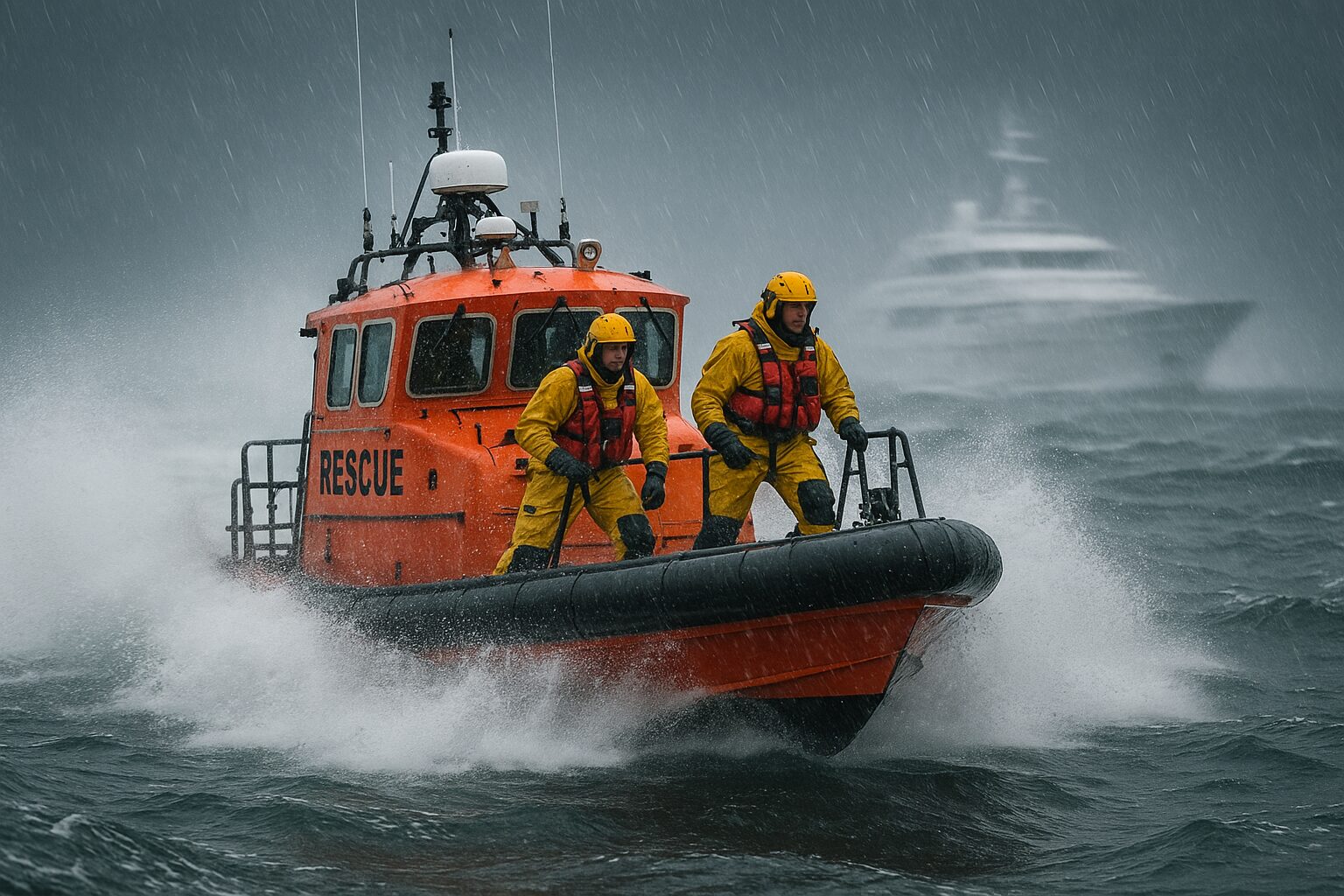
Operating fast rescue boats in adverse weather presents unique challenges that require specialized skills and a deep understanding of environmental factors. The course prepares participants to navigate and maneuver the FRB in challenging sea conditions, such as high winds, large waves, and strong currents, ensuring safety and effectiveness even when the weather is at its worst.
Participants learn to assess prevailing weather and sea conditions, adapting their operational techniques to maintain control and stability of the rescue boat. The program emphasizes the importance of clear communication and navigation skills, enabling the crew to coordinate effectively and execute rescue missions despite limited visibility or rapidly changing conditions.
Through practical exercises and scenario-based training, participants develop the confidence and competence needed to operate fast rescue boats safely in any environment. This focus on adaptability and situational awareness ensures that crews are prepared to respond to emergencies, no matter how challenging the conditions at sea.
Practical Exercises and Realistic Scenarios
Realism is central to STCW fast rescue boats training. Students participate in drills such as launching under challenging conditions, carrying out rescues in low visibility, and managing communication between the deck crew and the bridge team. Teamwork is also a critical component developed during these practical exercises.
These exercises help participants develop decision-making, communication, and leadership skills under stress. They learn to operate fast rescue boats effectively, even when faced with difficult sea conditions or environmental hazards.
Practical assessments test how well trainees apply their knowledge during simulated emergencies. Instructors evaluate command, coordination, and safety awareness during each scenario, ensuring all personnel achieve the required level of competence.
Casualty Recovery and First Aid
Casualty recovery and first aid are at the heart of fast rescue boat operations, requiring swift, skilled action to maximize survival chances. The course teaches participants how to safely recover casualties from the water, using proven techniques to minimize further injury and ensure a smooth transfer to the rescue boat.
Trainees gain hands-on experience with emergency equipment such as first aid kits, stretchers, and thermal blankets, learning how to provide immediate aid and stabilize casualties until further medical help is available. The program covers the principles of casualty handling, emphasizing the importance of careful movement and support to prevent aggravating injuries.
By mastering casualty recovery and first aid, participants enhance their operational readiness and contribute to the overall safety and effectiveness of fast rescue boat operations. This training ensures that every crew member is prepared to act decisively and compassionately in the most critical moments of a rescue mission.
Certification and Renewal Requirements
Upon successful completion, participants receive an internationally recognized Fast Rescue Boat certificate demonstrating proficiency in fast rescue boat operations. This certification confirms their competence to operate, launch, and recover fast rescue boats in accordance with the STCW Code.
The certification is valid for five years. To remain compliant, seafarers must complete a refresher course, the Updated Proficiency in Fast Rescue Boats (U-PFRB). If the certificate expires, it cannot be extended, and the full course must be retaken.
This ensures ongoing safety awareness, proficiency, and familiarity with current international standards. It is also recommended to maintain a logbook to document all training and assessments, which serves as proof for certification and renewal purposes.
Refresher or Updated FRB Training (U-PFRB)
The U-PFRB refresher course is shorter but equally rigorous. It focuses on maintaining skills and reinforcing confidence in FRB operations. Participants repeat launch and recovery drills, communication exercises, and casualty recovery scenarios while refreshing their knowledge of safety protocols.
Some flag states allow documented onboard training to partially satisfy renewal requirements, but completing the official course is the best way to ensure consistency and competence across all personnel. In the maritime industry, this process of updating or renewing certification is also known as ‘revalidation’.
Importance of FRB Training in Maritime Safety
STCW proficiency in fast rescue boats plays a critical role in maritime safety. A properly trained crew can act decisively during emergencies, reducing rescue time and preventing further casualties. Effective training ensures a high level of emergency response, which is essential for successful rescue operations. Poorly executed operations, on the other hand, can endanger lives and equipment.
Regular training strengthens crew competence, improves command and coordination, and ensures operational readiness under all environmental conditions. It builds a strong safety culture aboard ship, keeping everyone prepared for unforeseen situations.
Selecting the Right STCW-Approved Training Provider
Choosing the right training provider ensures you get proper instruction and recognized certification. Look for:
- Accreditation: The provider must be approved under the STCW Code.
- Experienced Instructors: Trainers with real-world rescue experience provide valuable insight.
- Modern Facilities: Updated boats, emergency equipment, and simulators ensure realistic and effective training.
- Clear Program Details: Review course outlines, registration requirements, and assessments before you attend.
- Course Fees: Understand all course fees and associated costs before enrolling to avoid unexpected expenses.
- Reputation: Check reviews to confirm quality and reliability.
Many mariners start their journey with Certified Training, a trusted provider offering world-class STCW maritime programs and courses that help students build long-term seafaring careers.
Preparation Tips for Trainees
To make the most of your course, prepare both physically and mentally:
- Maintain good health and physical fitness.
- Bring all required documentation, including identification and proof of previous certification.
- Dress appropriately for wet drills and pack extra clothing.
- Bring or use personal protective equipment as required for safety during practical exercises.
- Participate fully in both theory and practice; your engagement affects your practical assessments.
- Ask questions to expand your knowledge and satisfy any gaps in understanding.
Preparation helps you perform confidently and safely during demanding exercises, ensuring you meet all competencies required for certification.
FAQs
What is STCW Fast Rescue Boat Training?
It’s a certified course that teaches participants to launch, handle, and operate fast rescue boats safely in all sea conditions.
How long is the Fast Rescue Boat certificate valid?
The certificate is valid for five years. After that, a refresher course is required to renew proficiency.
What prerequisites are needed?
Trainees must show proof of good health and have completed proficiency in survival craft and rescue boats (other than fast rescue boats).
What drills are included?
Practical training includes launch, recovery, search patterns, casualty rescue, and capsize recovery drills.
What’s the difference between PFRB and U-PFRB?
The initial course leads to full certification, while the refresher focuses on maintaining skills and knowledge.
Can the certificate be extended after expiry?
No, once expired, the full course must be retaken.
How do I choose a provider?
Select an STCW-approved training center with experienced instructors and up-to-date equipment, such as Certified Training.
Conclusion and Next Steps
The STCW Fast Rescue Boat Training is more than a regulatory necessity; it’s a commitment to professionalism, leadership, and the protection of life at sea. The program gives crew members the confidence to operate fast rescue boats safely, recover casualties efficiently, and respond to emergencies with calm precision.
Maintaining your STCW proficiency through refresher courses is vital. It ensures ongoing compliance, up-to-date knowledge, and unwavering readiness in any emergency scenario.
If you’re ready to advance your maritime career, explore accredited programs through Certified Training. The skills, competence, and confidence you gain through this training will stay with you for a lifetime at sea.