

Breaking into the maritime industry can feel intimidating, especially when you are looking at multi-million dollar luxury vessels. If you are asking if you can work on a yacht without experience, the short answer is an absolute yes.
Every single season, the global superyacht fleet actively recruits “green” (inexperienced) crew members to fill critical, high-turnover junior roles. While professional yacht training is a prerequisite, you do not need a background at sea to discover how to get a yacht job with no experience.
Can you really work on a luxury superyacht with zero previous maritime experience?
The multi-billion dollar superyacht industry relies heavily on entry-level crew. Because the work is highly demanding and crew members frequently step up into senior roles or move on after a few seasons, captains constantly need a fresh influx of energetic talent to keep their operations running smoothly.
However, it is critical to understand what “no experience” actually means in this professional context:
- It means you have never worked on a superyacht or a professional commercial vessel before.
- It does not mean you can show up at a marina completely unprepared, untrained, or uncertified.
When you enter the fleet with zero time at sea, you start strictly within the junior ranks. Newcomers enter the industry as Junior Deckhands, Junior Stewardesses/Stewards, or Crew Cooks.
Many captains actively prefer getting hired as a yachtie with zero experience because a green crew has not developed bad operational habits from other vessels. Beginners are highly moldable, eager to learn, and typically display an intense willingness to work hard and absorb the specific systems of their new boat.
What are the non-negotiable legal qualifications you need before a yacht can hire you?
While captains are happy to train you on the daily operational preferences of their specific vessel, they cannot bypass international maritime law or insurance mandates. Meeting entry-level superyacht green crew requirements means acquiring a full combination of safety, medical, and department-specific certifications before a vessel can legally bring you onboard, even for a single afternoon of casual labor.
To pass this professional threshold, you must complete these baseline certifications:
- STCW Basic Safety Training Framework: This international safety framework is standard across the globe. You must complete five mandatory modules over one week: Marine Firefighting, Personal Survival Techniques, Elementary First Aid, PSSR, and Proficiency in Security Awareness.
- ENG1 Seafarers Medical Certificate: An official physical examination administered by an approved maritime doctor to verify you are fit for duty at sea.
- Department-Specific Training Modules: Because a successful crew goes across with multiple courses under their belts, your initial bundle should include practical training tailored to your role, such as a superyacht stewardess programme or an exterior deckhand competency course.
Attempting to sit these courses in international hiring hubs can be incredibly expensive due to foreign currency exchange rates and high local accommodation costs. Booking your comprehensive training track in Cape Town at Certified Training allows you to secure all of your vital certifications affordably in South Africa before you book your flights.
How do you translate your regular job history into a killer “yacht-ready” CV?
Your land-based work history holds immense value if you know how to present it correctly. The key to an essential yacht crew job search strategy is identifying your transferable shore-based skills and mapping them directly to the department you want to join.
The Interior Department Formula (Steward/ess)
If you are targeting a role in guest services and laundry management, you need to highlight any land-based background that demonstrates attention to detail, luxury standards, and stamina. Excellent transferable skills for a yacht stewardess include:
- High-end hospitality, fine-dining table service, or professional bartending.
- Housekeeping experience in luxury boutique hotels, luxury lodges, or private estates.
- Au-pair work, high-pressure event coordination, or beauty and wellness therapy.
The Exterior Department Formula (Deckhand)
If your goal is to work on the exterior of the vessel, captains want to see practical, hands-on capabilities and some working knowledge of safety and upkeep. To understand what a green deckhand does, you must highlight background experience in:
- Construction, carpentry, professional painting, or structural maintenance, as well as practical skills such as varnishing and plumbing, are especially valued for a junior deckhand starting in exterior roles.
- Watersports instruction, professional lifeguarding, or PADI dive master certification.
- Mechanical engineering, diesel engine maintenance, or military and disciplined team environments.
The 1-Page Formatting Rule
Superyacht captains and crew recruitment agents read hundreds of profiles daily. Your maritime CV must follow a strict industry format: a crisp, single-page layout tailored to the job description keywords for each application, showing industry knowledge through relevant certifications and targeted experience.
Place a professional, smiling headshot (clean-cut grooming, wearing a neutral polo shirt) at the top right corner.
Put your mandatory maritime certifications, contact details, and nationalities/visas clearly at the very top of the page, followed by your targeted transferable work history with your most recent experience first, in reverse chronological order.
What does the day-to-day work actually look like for a green crew member?
It is vital to dispel the luxury cruise myth early. Working on a superyacht is physically grueling, highly repetitive, and demands absolute professionalism behind the scenes.
The Reality of a Green Stewardess Role
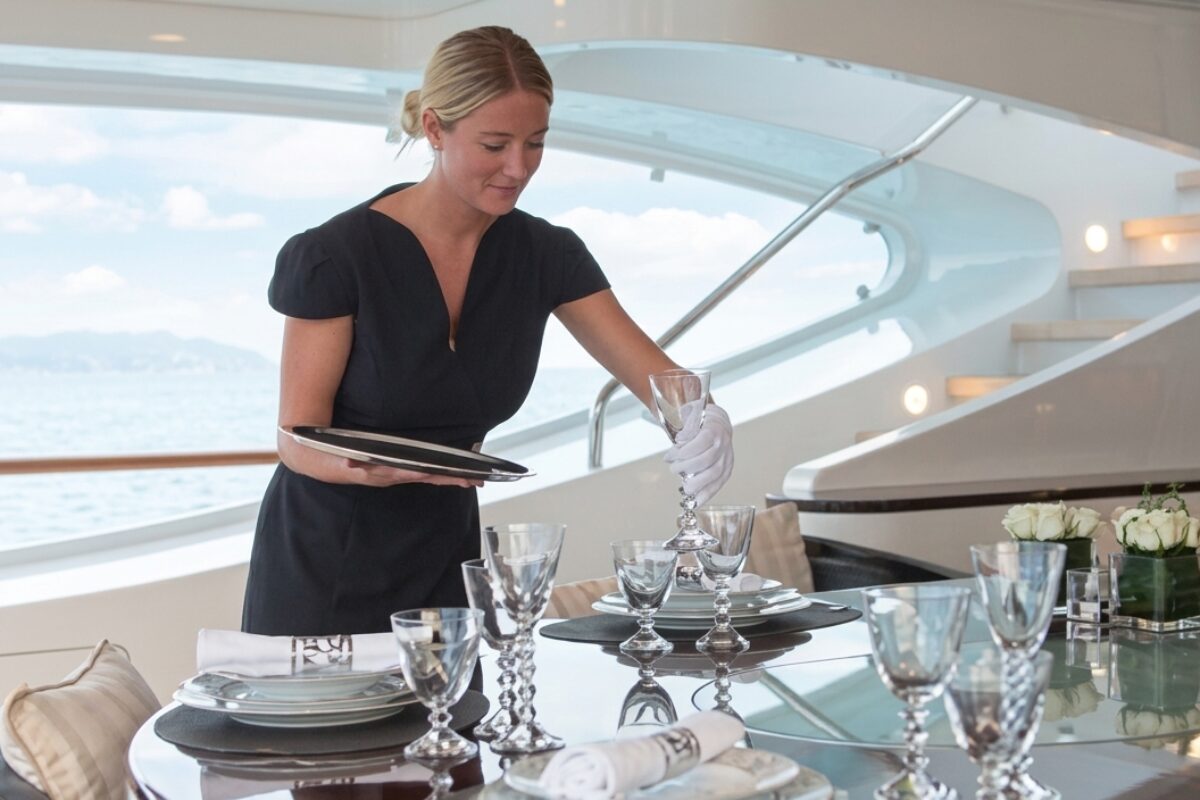
The interior department is responsible for maintaining a flawless environment for the owners and guests. During guest trips or peak periods, interior crew often work 12 to 16-hour days, and that level of service comes with real responsibility; the role can still be fun in the right moments, but professionalism must come first when guests are on board.
A junior stewardess can expect a daily rotation consisting of:
- Laundry Management: Washing, ironing, and meticulously pressing guest linens and crew uniforms for hours at a time.
- Deep-Cleaning Detailing: Cleaning guest cabins to a five-star standard, which frequently involves using fine brushes to detail grout, polished marble, and delicate finishes.
- High-Pressure Service: Standing for long shifts during guest trips to assist with silver service dining, cocktail preparation, and constant provisioning.
The Reality of a Green Deckhand Role
The exterior department focuses on protecting the multi-million dollar physical asset from saltwater, sun damage, and general wear. A junior deckhand’s daily grind, often the first position many newcomers secure on deck, includes:
- The 5:00 AM Washdown: Rinsing the entire hull and superstructure with fresh water before the sun rises to eliminate salt crust.
- Meticulous Drying: Spending hours using chamois leathers to dry stainless steel fixtures, windows, and gelcoats to prevent water spots.
- Teak and Paint Maintenance: Scrubbing teak decks, sanding wood surfaces, applying varnishes, and performing basic preventative painting under the sun. This is where you build practical ability through repetitive exterior tasks, and your knowledge improves quickly once you do them every day.
What is the smartest job-hunting strategy to land your first yacht job fast?
You will not find permanent superyacht crew positions while remaining in South Africa. Once you hold your STCW certificate and the other important courses, you must transition to an active, international job hunt.
The Power of Daywork Networking
The most effective tool for securing superyacht daywork is for beginners. Daywork refers to temporary, casual daily labor hired directly by yacht officers to assist with intense washdowns, guest trip preparations, or shipyard refits.
Landing daywork requires most people to physically move into the yacht world’s major recruitment capitals like Antibes (France), Fort Lauderdale (USA), or Antigua during their respective peak hiring windows.
Med season hiring often starts in April to May, the broader European season runs from May to September, and the Caribbean season runs from October to April, with Caribbean hiring often ramping up from September to November and U.S. Northeast hiring generally aligning with the European season.
By walking the docks daily, dressed professionally, you pick up these temporary jobs. Daywork is critical because it gives you local references, puts money in your pocket, and frequently serves as a direct trial that turns into a permanent contract, often many people’s first opportunity in the yachting industry.
Leveraging Crew Agencies Properly
Once you land in an international hiring port, you must check in with specialized crew recruitment agencies or a crew agency.
Treat every interaction with an agency agent like a formal interview, because they want to see that you are genuinely interested in this as a yachting career, not just casually exploring a job.
Be punctual, keep your online profiles updated on each agency website, dress in professional crew attire, and check in via their preferred systems regularly to stay fresh in their minds when a captain calls looking for green crew.
Presenting yourself as the right person with the right attitude also improves your placement chances.
How does getting STCW basic safety training before you leave home give you an unfair advantage?
A common misconception among beginners is that traveling to international hiring hubs with nothing but an STCW basic safety training certificate is enough to stand out. While you need an STCW to legally work on boats, the modern green crew market is highly competitive, and students go across with many courses under their belts to get started.
Arriving in a major port holding only the bare legal minimum safety slip puts you at a disadvantage. To match the baseline of the modern job market, successful green crew members proactively complete a comprehensive training track before leaving home. Combining your safety framework with a dedicated superyacht stewardess programme or an advanced exterior deckhand skills course is what gives you a fighting chance against the global talent pool, as professional hospitality and deck training materially improve your chances of securing a yacht crew position.
When a captain looks at entry-level CVs, they look for candidates who show the commitment needed for a long-term yachting career. They will always select the recruit who already holds an array of specialized certifications and understands how to handle luxury interior service or operate high-speed deck machinery without constant supervision. Investing in your complete multi-course skill set at Certified Training before departure minimizes your onboarding time, making you an immediate asset to a boat and drastically reducing the time you spend paying expensive rent in overseas crew houses.
Frequently Asked Questions
Do I need to know how to sail or swim to work on a superyacht?
You do not need to know how to sail, as the vast majority of the industry consists of large motor yachts. However, knowing how to swim is absolutely mandatory, and charter yachts follow the same safety expectations. Your STCW sea survival modules will require you to demonstrate basic water competence, including swimming in overalls and launching life rafts, to pass the safety framework; if needed, imagine the emergency drills beforehand.
How long does it typically take to find a yacht job if you have no experience?
The timeline varies based on your timing, attitude, and qualification level. Some green crew members secure a role within two weeks of arriving in a major hub like Antibes or Fort Lauderdale, while others may take two to three months of consistent dockwalking and daywork networking to secure a permanent contract.
What age limits or physical requirements apply to green yacht crew?
To work commercially at sea, you must be at least 18 years old. There is no official upper age limit for green crew, though roles are physically demanding. The primary physical requirement is passing your ENG1 medical exam, which strictly checks for healthy cardiovascular fitness, clear hearing, and full color vision.
Can I apply for entry-level roles online from home, or do I have to travel to a hiring port?
While you should register with online job boards and crew agencies from home, your chances of getting hired increase dramatically once you travel to an international port.
Captains filling junior positions almost always hire from the local talent pool of crew who are immediately available for face-to-face interviews and next-day work assignments.
What is the average starting salary for a green deckhand or stewardess with zero experience?
Starting packages for entry-level positions generally range between €2,000 and €3,000 per month for European fleets, or $2,500 to $3,500 per month in US waters. These positions include full onboard living arrangements, medical insurance, uniform provisions, and food, meaning your basic living expenses are completely covered.
Can couples with no experience find jobs together on the same superyacht?
It is exceptionally difficult for a green couple with zero experience to secure a joint position on the same vessel.
Captains rarely take on the structural risk of hiring an unproven couple simultaneously, even though onboard life can feel like a temporary family when the team works well.
The best approach is to find individual roles first, build your personal industry experience, and look for joint “yacht couple” roles after one or two full seasons; many crew eventually become close friends while working together, but couples should still establish themselves individually first.
Final Thoughts
You can absolutely build a successful career on a superyacht without prior experience, provided you treat your preparation like a professional business venture.
Gaining the right mindset, understanding the grueling realities of daily work, and locking down your compliance credentials are the foundational steps to turning this goal into reality.
Before booking your flights to global hiring ports, make sure you hold the qualifications that captains demand.
Need help choosing the right path?
Speak to Certified Training for clear, role-specific guidance on the courses that best fit your yacht crew goals.