

What Is a Superyacht Training Academy and Why Do You Need One?
Breaking into the superyacht industry is not about luck. It is about preparation, positioning, and showing up ready from day one. Most people quickly realize that enthusiasm alone will not get them hired, especially in such a competitive environment. That is where structured training becomes the real starting point.
A superyacht training academy is designed to prepare you for life and work onboard luxury vessels. These academies offer yacht crew training courses that cover safety, operations, and professional conduct. The goal is to ensure that every crew member can contribute effectively from their very first day at sea.
Without proper certifications, most yachts will not even consider your application. Crew is expected to complete STCW training as a minimum requirement before stepping onboard. This often includes enrolling in an STCW course, which leads to an STCW certificate that proves you meet global safety standards.
Training academies go beyond basic theory and focus on real-world expectations. They introduce you to the pace, standards, and responsibilities of working on a superyacht. If you are serious about how to start a superyacht career, choosing the right Superyacht Training Academy becomes your first real decision.
Why Is Choosing the Right Superyacht Training Academy Important for Your Career?
Not all training providers deliver the same level of quality, and that difference becomes obvious once you start applying for jobs. Some academies are respected across the industry, while others are barely recognized. This gap can directly influence how employers view your qualifications.
The best superyacht training academy builds credibility before you even step onboard. Recruiters and captains often recognize certain academies and trust the standard of training they provide. This can give you an advantage when competing for entry-level positions.
On the other hand, poor-quality training programs can leave you unprepared and underqualified. Some may offer certificates that are not widely accepted or fail to include practical training. That combination can slow down your job search and create unnecessary setbacks.
Choosing the right academy helps you develop confidence, skills, and industry awareness. It positions you as someone ready to work, not someone who still needs basic guidance. In a fast-moving environment like yachting, that distinction matters more than most people expect.
What Certifications Should a Good Superyacht Training Academy Offer?
Every superyacht career begins with safety training, and there is no way around it. The industry operates under strict maritime regulations, and every crew member must meet those standards. That is why certifications are the foundation of all superyacht training courses.
The most important certification is STCW basic safety training. This course covers essential skills such as firefighting, first aid, and survival techniques. Whether you are taking an STCW course in Cape Town or elsewhere, the outcome is the same: you receive an STCW certificate that qualifies you to work onboard.
A strong superyacht crew training academy should also offer additional courses that help you specialize. These courses allow you to move beyond basic requirements and start building a career path. They also make your profile more attractive to recruiters.
Here are some key certifications and courses to look for:
- STCW basic safety training
- Yacht deckhand training course
- Yacht stewardess training course
- Hospitality and service training
- Maritime security courses
Understanding the STCW course price and comparing options like the STCW course price in Cape Town can also help you plan your investment. The more relevant skills you have, the easier it becomes to secure your first role.
How Can You Tell If a Superyacht Training Academy Is Accredited?
Accreditation is one of the most important factors to check before enrolling in any course. It confirms that the training meets international maritime standards and is recognized globally. Without it, your certification may not hold value in the job market.
When a course is accredited, it means it has been approved by official maritime bodies. These organizations ensure that training programs follow strict guidelines and deliver consistent quality. This is especially important in an industry where safety is non-negotiable.
Some of the most recognized accreditation bodies include:
- MCA (Maritime and Coastguard Agency)
- RYA (Royal Yachting Association)
- IAMI GUEST
Before committing to any academy, take the time to verify its credentials. Ask direct questions about accreditation and whether your STCW training and certification will be globally recognized. A reputable academy will always provide clear and transparent answers.
What Courses Should a Superyacht Training Academy Provide for Different Crew Roles?
Not every role onboard a yacht requires the same skill set, which is why training should be tailored to specific career paths. Understanding your desired role early on helps you choose the right courses. This prevents you from wasting time on training that does not align with your goals.
Deckhands, for example, focus on exterior operations and maintenance. Their training typically includes line handling, navigation basics, and water sports support. These skills are essential for keeping the yacht running smoothly on the outside.
Stewardesses, on the other hand, focus on interior service and guest experience. Their training includes housekeeping, food service, and attention to detail. This role requires a strong focus on presentation and hospitality.
Many academies offer bundled superyacht career training programs for beginners. These packages often combine an STCW course with role-specific training, giving you a complete entry-level pathway into the industry.
Why Is Practical Training Important When Choosing a Superyacht Training Academy?
There is a clear difference between understanding a concept and applying it in real life. In the superyacht industry, that difference can affect safety, performance, and confidence. This is why practical training plays such a critical role.
Theoretical learning provides the foundation, but hands-on experience builds real capability. When you practice drills and simulations, you develop muscle memory and decision-making skills. This makes it easier to respond effectively in real situations.
Practical training often includes:
- Emergency response simulations
- Firefighting exercises
- Safety drills
- Equipment handling demonstrations
This is especially important during STCW training, where real-life scenarios are simulated to prepare you for onboard emergencies. Employers value crew members who can step in and contribute immediately.
How Can You Evaluate the Reputation of a Superyacht Training Academy?
Reputation can tell you a lot about an academy before you even step into a classroom. In an industry driven by referrals and networks, a strong reputation carries real weight. It often reflects the quality of training and the success of past students.
One of the best ways to evaluate an academy is by researching reviews and testimonials. Former students often share honest insights about their experiences. These can help you understand what to expect from the program.
You should also look at alumni success stories and industry connections. Academies with strong networks often have better relationships with recruiters and captains. This can lead to more opportunities after completing your training.
Instructor experience is another key factor to consider. Trainers with real superyacht backgrounds bring practical knowledge that goes beyond textbooks. That kind of insight can make a significant difference in your learning experience.
What Career Support Should a Superyacht Training Academy Offer?
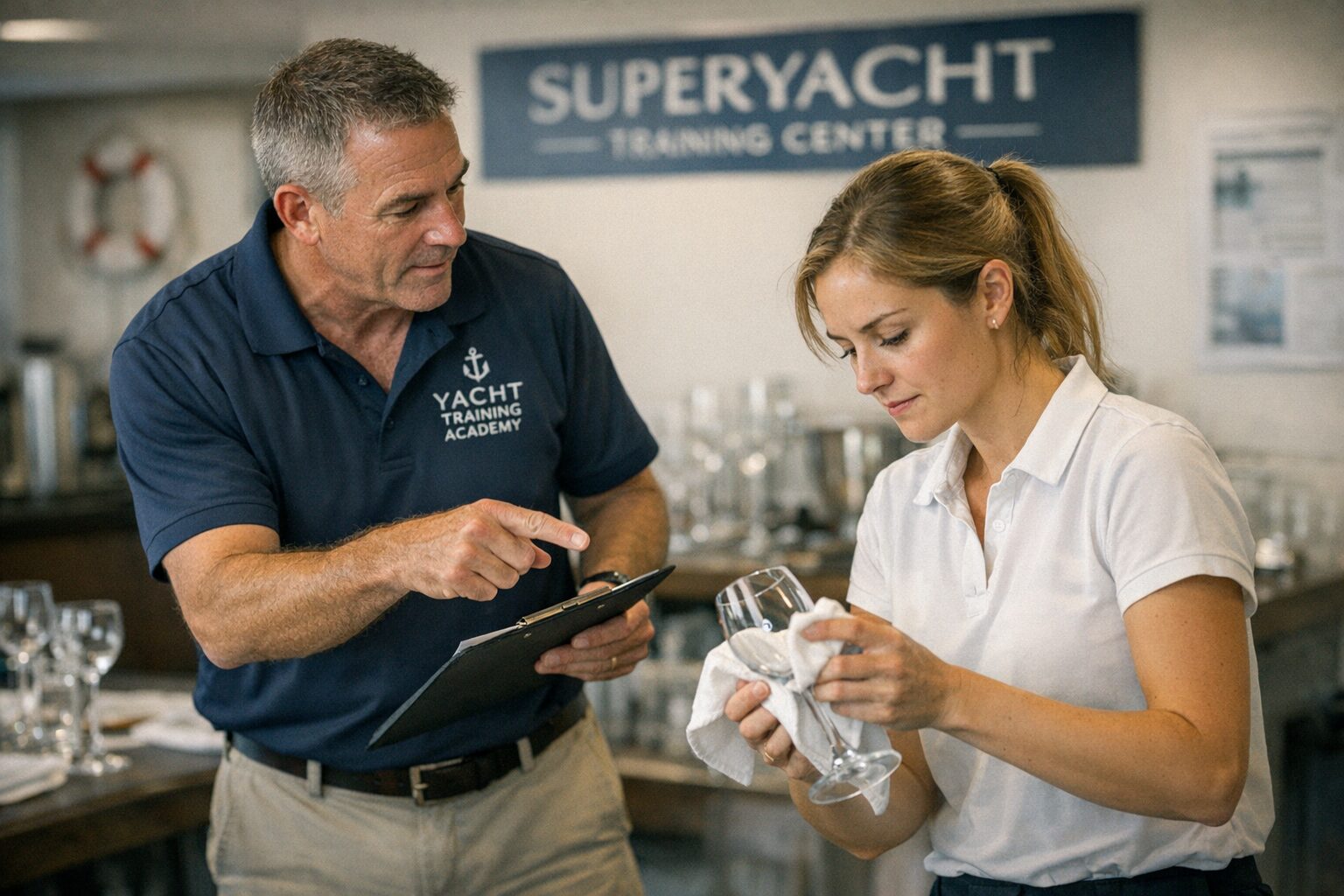
Completing your training is only part of the journey. The next challenge is securing your first job, and this is where career support becomes essential. A good academy helps you bridge the gap between training and employment.
Career support services can include CV writing, interview preparation, and networking opportunities. These elements help you present yourself professionally to recruiters. They also give you a clearer understanding of what employers are looking for.
Here are some valuable career support services to look for:
- Yacht crew CV writing assistance
- Interview coaching
- Networking events
- Introductions to recruitment agencies
Having access to these resources can significantly improve your chances of getting hired. It gives you direction and support during what can otherwise feel like a difficult process.
How Much Does Superyacht Training Cost and What Should You Expect to Pay?
Training costs can vary widely depending on the academy and the courses included. Some programs focus on basic certifications, while others offer complete career packages. Understanding what you are paying for helps you make a smarter decision.
Several factors influence the cost of superyacht training. These include course duration, number of certifications, and the reputation of the academy. It is also worth comparing the STCW course price across providers, especially if you are considering an STCW course in Cape Town.
It is important to view training as an investment rather than an expense. A well-structured program can lead to a high-earning career with global opportunities. Choosing a cheaper option may save money upfront, but cost you more in the long run.
Instead of focusing only on price, compare the overall value of each program. Look at what is included and how it supports your career goals.
What Questions Should You Ask Before Choosing a Superyacht Training Academy?
Making the right decision starts with asking the right questions. This helps you gather the information you need to compare different academies effectively. It also ensures that there are no surprises after you enroll.
You should always ask about accreditation, course content, and career support. These are the core elements that determine the quality of a training program. Clear answers will help you understand what you are signing up for.
Here are some key questions to consider:
- Is the academy accredited?
- What certifications will I receive, including my STCW certificate?
- Does the academy offer job placement support?
- What practical training is included?
- What experience do the instructors have?
These questions give you a solid framework for evaluating your options. If an academy struggles to answer them clearly, it may not be the right choice.
How Do You Choose the Right Superyacht Training Academy for Your Career Goals?
Choosing the right superyacht training academy comes down to alignment. It is about finding a program that matches your goals, supports your development, and prepares you for real-world work. When these elements come together, your chances of success increase significantly.
Start by evaluating accreditation and course offerings. Then look at practical training, career support, and reputation. Each of these factors plays a role in shaping your overall experience.
When you choose carefully, you are not just completing a course. You are building a foundation for a long-term career in the superyacht industry. That foundation determines how quickly you progress and how far you can go.
FAQs
How do I choose the right superyacht training academy?
Focus on accreditation, course offerings, practical training, career support, and reputation. These factors directly impact your job opportunities.
What certifications should a superyacht training academy provide?
At a minimum, STCW basic safety training and a valid STCW certificate. Additional courses like deckhand or stewardess training add strong value.
Is STCW training required to work on a yacht?
Yes. Completing an STCW course is mandatory for most yacht crew positions worldwide.
How long does superyacht training take?
Basic training can take a few weeks, depending on the STCW training schedule and additional courses selected.
How much does superyacht training cost?
Costs vary depending on the academy and course structure. Comparing STCW course price options can help you budget effectively.
Can a superyacht training academy help me find a job?
Many reputable academies offer career support, including CV assistance and recruiter connections.
Where are the best superyacht training academies located?
Leading academies are typically found in major yachting hubs such as Cape Town, the UK, and Europe.
Final Thought
The superyacht industry rewards those who prepare properly and take their first steps seriously. Choosing the right superyacht training academy is not just about getting certified; it is about setting yourself up for long-term success. When you make the right choice early, everything that follows becomes far more achievable.
If you are ready to take the next step, start by comparing accredited academies, reviewing course options, and understanding exactly what your chosen path requires. The sooner you commit to the right training, the sooner you can step onboard with confidence and begin building your career in the superyacht industry.
Visit Certified Training to explore course options, book your training, and start your journey today!