
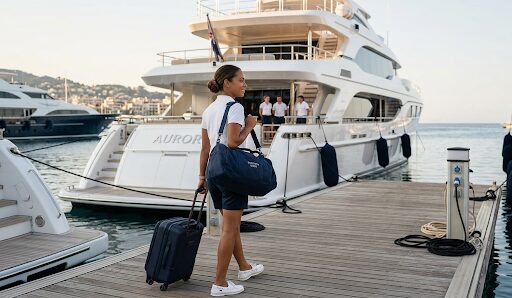
There is a very specific feeling that comes with standing on a dock in the Mediterranean, the air smelling of salt and expensive wax, as you look up at a vessel the size of a city block. For most people, these floating palaces are things of myth, seen only in glossy magazines or on social media feeds of the ultra-wealthy.
Yet, beyond their opulence, they offer a unique ‘yacht life‘, a lifestyle filled with travel, adventure, and personal growth, making work in the superyacht industry especially appealing to those seeking something extraordinary.
We know, however, that these boats are not just toys; they are thriving workplaces that require a dedicated, highly trained army of professional crew to keep them moving.
These skilled individuals form the backbone of the superyacht industry, maintaining the vessel and ensuring guests experience the highest standards of service.
If you are currently sitting in South Africa, or even looking for a smarter way to train from abroad, you are likely wondering how to bridge that gap between the Atlantic Seaboard and the global stage.
We have seen thousands of ambitious crew members make this transition, moving from beginners to seasoned international travelers in a matter of months. Because there is virtually no commercial yachting work within Cape Town itself, our focus at Certified Training is entirely on preparing you for the reality of the international market.
In this guide, we will break down the exact roadmap you need to follow to secure your first yacht job. We will cover the certifications that act as your passport, the CV secrets that get you noticed by busy captains, and the logistical maneuvers required to land in a foreign hub ready to work.
Let’s explore how you can turn that dream of a global career into a tangible, high-paying reality by training with the experts at Certified Training before heading overseas.
What are the mandatory certifications you need to get your first yacht job overseas?
Before you can even think about booking a flight to Europe or the USA, you need to possess the right qualifications and complete a health check.
The maritime world is strictly regulated by international law, and no captain, no matter how much they like your personality, can hire you without the essential qualifications.
These include mandatory safety certifications and medical clearances, which are required for all yacht crew. We view these qualifications as the foundation of your professional identity.
Most entry-level yacht crew, known as ‘green yachties’, must have the STCW Basic Safety Training and ENG1 medical certification before they can be hired.
The STCW Basic Safety Training is a mandatory safety course required for yacht crew, covering essential skills such as firefighting, personal survival techniques, and first aid/CPR.
STCW Basic Safety Training
The most critical starting point is the STCW Basic Safety Training. This 5-module course is the global legal minimum and must be completed at an accredited South African facility before flying abroad.
It includes hands-on modules in firefighting, personal survival techniques, and first aid. The training is highly practical, involving extinguishing real fires, practicing survival techniques in pools, and conducting first aid drills to ensure you aren’t a liability when things go wrong in the middle of the ocean.
The ENG1 Medical Certificate
Next, you must obtain the ENG1 medical certificate for yachting. This fit-for-duty exam, while taken in SA, is the primary health requirement for international insurance and ensures you are medically capable of handling life at sea. It is a non-negotiable document that every international captain will ask to see before you step on board.
Proficiency in Designated Security Duties (PDSD)
We always advise our students to include Proficiency in Designated Security Duties (PDSD) in their training package. This specific add-on is critical for crew members entering the international fleet on ISPS-compliant vessels. Having this on your STCW certificate means you are qualified to assist with security tasks on the world’s largest superyachts.
How do you prepare a professional yachting CV for international captains?
Once your certificates are in hand, your next task is to condense your life into a document that speaks the language of a superyacht captain. A yachting CV is vastly different from a corporate resume you might use in South Africa.
We have seen that a well-formatted CV is often the difference between getting a daywork trial and being ignored.
The Global Standard
The global standard for a yachting CV requires very specific formatting requirements, including a professional photo. This photo should meet the expectations of Mediterranean and American hiring managers: clean-cut, smiling, and wearing a professional white polo. You want to look like you already belong on the deck of a 100-meter vessel.
Translating Local Experience
One of our favorite tasks is helping students translate local experience into yachting terms. We explain how to frame South African hospitality, sports, or technical skills into language that appeals to international recruiters.
If you were a waiter in a busy restaurant, you have high-pressure interior service experience; if you were a local lifeguard, you have water safety and guest observation skills.
Visa Readiness
In the international market, speed is everything. We cannot stress enough the importance of listing your B1/B2 or Schengen visa status prominently to show you are ready to work overseas immediately. Showing that you already have these documents proves to a captain that you are a serious candidate who can fly to the boat tomorrow if needed.
Which international yachting hubs and seasons should you target?

Landing your first job is about being in the right place at the right time, and the major international yachting hubs offer abundant job opportunities and serve as centers for crew recruitment. Since there is no local industry to speak of, your flight path to success involves moving your physical self to where the boats are.
Fort Lauderdale, USA, is recognized as the global yachting capital for the winter season, boasting over 300 marinas and the highest concentration of yacht agencies globally, making it a prime location for job seekers in the yachting industry.
Antibes, France, is a major hub for yacht crew during the Mediterranean season (March to May) and is home to Port Vauban, Europe’s largest marina. Palma de Mallorca, Spain, has become a premier destination for superyacht activity, offering year-round opportunities for crew members and extensive yacht refits.
Recruitment agencies play a key role in crew recruitment in these hubs, providing personalized service and supporting career growth by connecting candidates with suitable positions. We help you navigate the transition from training in South Africa to landing in hubs like Antibes (France), Palma (Spain), or Fort Lauderdale (USA).
Understanding Global Seasons
Timing your travel is the most important logistical decision you will make. You need to break down the Med Season, which usually starts with a hiring surge in March and April, versus the Caribbean/US Season, which kicks off in October and November.
Arriving in these hubs during the hiring window ensures you aren’t waiting around during the quiet months.
The Role of Overseas Crew Houses
When you arrive in an international hub, you won’t be staying in a hotel. You will be staying in a crew house, which is a specialized hostel for yachties. Crew houses offer shared accommodation, which is beneficial for networking and being immersed in the yachting community.
Staying in these hubs allows for the networking and daywork necessary to secure a first contract. These houses are the centers of information where you will hear about the latest job openings.
What is dockwalking, and how do you do it in foreign marinas?
Dockwalking is the time-honored tradition of physically walking from boat to boat in a marina to ask for work. While it might sound intimidating, it is how a massive percentage of crew get their foot in the door. We believe that mastering the art of the dock walk is the ultimate test of your commitment to the career.
International Dock Etiquette
There is a strict code of conduct when approaching a multi-million dollar vessel. We provide tips on dressing professionally and the cultural nuances of approaching yachts in European or American marinas. You always approach with a smile, a positive attitude, and a stack of CVs, ensuring you never step on the boat unless invited.
Securing Daywork Abroad
The primary goal of dockwalking is securing daywork abroad. Working daily cash jobs in international ports is the most common way for green crew to prove their value to a captain. If you work hard for a day, the crew is much more likely to recommend you for a permanent role.
Building a Global Network
Every person you meet on the docks, from the security guard to the chief stew, is a potential link to your first job. We emphasize that the relationships built on the docks are what lead to permanent, high-paying international roles. This industry is small, and your reputation among the local community is your best asset.
How do you leverage global recruitment agencies and online groups?
While dockwalking is the boots-on-the-ground approach, you must also maintain a strong digital presence. The modern yachting world moves fast, and often a job is filled within minutes of being posted. We show you how to manage your digital footprint so that recruiters can find you easily.
Registering with the Big Agencies
The first thing you should do upon landing in Palma or Antibes is to register with the major recruitment firms. These agencies act as the gatekeepers for the most prestigious boats. We guide you through the process of signing up with major firms in Palma and Antibes once you have arrived from South Africa.
Digital Check-ins
Simply registering isn’t enough; you must stay relevant. We discuss the importance of checking in with agencies via their apps to show you are physically present in the hub and ready to work. Recruiters focus on the people who are active and available right now, so a daily digital check-in keeps you on their radar.
Navigating Facebook Groups
Social media is a goldmine for entry-level superyacht jobs for beginners. We highlight specific international groups where last-minute roles are frequently posted for those already on the ground. Being active in these groups allows you to snag opportunities before they even reach the formal agencies.
Why is South Africa the ultimate training ground for an international career?
You might wonder why you should train in Cape Town if the work is in Europe. The answer lies in the unique advantages that the South African maritime landscape offers. We believe that South Africans and international students alike are uniquely positioned to succeed by starting their journey here.
Currency Advantage
The most practical reason is the currency advantage. Highlighting the cost-effectiveness of paying for world-class training in Rands before earning in Euros, Dollars, or Pounds is a massive financial win. It allows you to complete your required yachting course without the high costs of European schools, leaving you with more travel money to sustain your job hunt overseas.
High Standard of Training
South African academies are known globally for producing hardworking, highly skilled crew. Our local instructors often have decades of international experience, meaning the yacht training is taught to the highest possible standard. When a captain sees a South African certification on the dock, they expect a strong work ethic.
The Career Launchpad
At Certified Training, we view ourselves as a career launchpad. We provide the mentorship needed to bridge the gap between finishing an STCW course and flying to your first job. We understand the specific anxieties of heading abroad, and we are here to ensure you feel prepared for every challenge.
Frequently Asked Questions About Getting a First Yacht Job
Can I get a yacht job overseas with zero prior boat experience?
Absolutely. Every person in the industry started with zero experience. What matters to captains is your right attitude, your transferable skills, and your willingness to work harder than anyone else on the dock. Captains especially value candidates who can handle long hours and maintain professionalism and positivity even in demanding conditions.
How much money do I need to save before flying to Europe or the USA for work?
We generally recommend having a solid runway fund saved for your first 4 to 8 weeks in a hub. This covers your stay in a crew house and your daily expenses while you hunt for work. Having a financial cushion allows you to focus on the job hunt without stress.
Which visa is best for a South African looking to work on yachts?
For the USA, you typically need a B1/B2 visa, and for Europe, a Schengen visa. We provide guidance on how to navigate these applications during your time with us so you are ready to fly as soon as your certificates arrive.
Is it better to look for a job in France or Florida first?
This depends entirely on the season. If it’s March, head to France; if it’s October, Florida is the place to be. We help you look at the calendar and decide which flight path offers the highest chance of success.
How long does it typically take to find a job once I arrive in a hub?
On average, it takes 2 to 6 weeks to secure your first permanent role. However, job hunting in the yachting industry often involves strategies like dockwalking, networking, and being persistent during peak seasons. Many students pick up day work within their first few days, which helps cover their living costs while they wait for the perfect full-time contract.
Do international yachts recognize South African STCW certificates?
Yes. As long as your certificate is SAMSA-approved, it is recognized globally. South Africa is a respected maritime nation, and our STCW training is valid in every port around the world.
What is the typical starting salary for an entry-level international deckhand?
Entry-level yacht crew, such as Junior Deckhands or Stewardesses, typically earn between €2,000 and €3,000 per month, with the industry standard around €2,500. A yacht deckhand is responsible for exterior maintenance and operational tasks on the yacht, such as cleaning, polishing, handling water toys, assisting with docking, and understanding yacht systems and knots.
The yacht stewardess is a hospitality professional responsible for interior service, guest experience, and housekeeping aboard luxury yachts, maintaining high-end service standards and supporting the team.
Most superyachts charter for at least part of the year, and crew can earn significant tips, often around 10% of the charter fee, which can lead to earnings of €5,000 after a single week-long charter. When you consider that your food and living expenses are all covered, your ability to save is unmatched by any local career.
Finding a competitive STCW course price in Cape Town is the first step toward this financial freedom.
Conclusion
We believe that a career in yachting is the ultimate way for young South Africans and international travelers to see the world and build a professional future. It is a demanding environment, but the rewards, both financial and experiential, are unlike anything else.
The journey from the classroom in Cape Town to the deck of a superyacht in Monaco is a path we have helped many people walk with confidence.
The first step is simply deciding that you want more than a standard office life. By getting your STCW course in Cape Town, perfecting your CV, and landing in the right hub, you are setting yourself up for a life of adventure. We have the tools, the experience, and the passion to help you get there.
Are you ready to swap the commute for the coastline? Your international career starts with a single decision to get qualified. Whether you are looking for an affordable STCW course price or comprehensive instruction, we are here to help.
Contact Certified Training today to book your STCW training and take the first step toward landing your first yacht job.