
Deciding to pursue an international maritime career is a major lifestyle shift that offers incredible financial freedom and the opportunity for global travel. However, before purchasing flight tickets and booking crew accommodation, it is essential to evaluate the true pros and cons of working on superyachts.
While the income potential is undeniable, the physical and emotional demands require a high level of personal resilience. Balancing these factors will help you establish realistic expectations for entry-level yacht crew roles before starting your formal yacht training and exploring your essential maritime courses.
Why must you look past social media to find the true reality of yacht crew life?
The public perception of the superyacht industry is heavily influenced by social media. Polished video clips and travel photos frequently show crew members swimming in the Mediterranean, exploring Caribbean islands, or enjoying vibrant nights out in exclusive ports.
These curated snapshots overlook the core superyacht crew lifestyle realities, hiding the grueling behind-the-scenes physical labor, long shifts, and strict maritime discipline that rule every vessel.
The reality is simple: in real life, crew members are luxury hospitality providers and technical maintenance workers, not guests. The beautiful destinations are your workplace, not your vacation resort.
Entering the industry with grounded expectations prevents early disappointment. Completing your initial STCW training helps bridge the gap between the screen and reality, preparing green crew members to build a sustainable, multi-year career path rather than burning out or leaving early during their first season.
How do the pros and cons of working on superyachts compare side-by-side?
To judge whether a maritime career aligns with your goals, you must evaluate the clear financial advantages alongside the operational personal sacrifices. Understanding the logistics, including the baseline STCW course price, is part of calculating your upfront career investment. The following comparison table outlines this balance:
| The Advantages (Pros) | The Sacrifices (Cons) |
| High Disposable Income: Tax-free base salaries with zero deductions for onboard living costs. | Grueling Work Hours: 16-to-18-hour shifts during peak charter seasons with no traditional weekends. |
| Accelerated Savings: Food, luxury accommodation, medical care, and uniforms are fully covered by the boat. | Zero Personal Privacy: Living in tight, shared crew cabins with bunk beds and communal living spaces. |
| Massive Financial Bonuses: Cash charter tips that can add thousands of Euros/Dollars to your baseline monthly pay. | Emotional Isolation: Missing major family milestones, holidays, and birthdays due to unpredictable sea schedules. |
| Global Travel Perks: Access to highly exclusive, remote, or luxury destinations at zero personal expense. | High-Pressure Environments: Navigating intense crew dynamics and volatile guest demands confined inside a steel hull. |
What are the major pros that make a superyacht career incredibly lucrative?
The primary advantage of joining the global superyacht fleet is its unmatched wealth-building potential. To legally step on board and unlock this potential, every crew member must first hold a valid STCW certificate. Because your essential day-to-day overheads, such as high-end meals, accommodation, insurance, and uniform laundry, are covered by the vessel, your regular living expenses disappear.
This unique setup allows dedicated seafarers to save the vast majority of their income, turning their entire superyacht crew salary and tips allocation into pure disposable savings and a considerable amount of money over time.
On commercial charter vessels, this financial structure is significantly boosted by cash tips. When clients charter a yacht, industry standards suggest a discretionary tip of 10% to 20% of the base charter fee, split evenly among the crew.
Completing your mandatory STCW basic safety training is the legal baseline that allows you to participate in these highly lucrative runs on charter yachts, where crew can receive tips on top of their base salary, and a single successful week can yield a cash envelope that equals a major portion of your standard monthly salary.
Beyond the immediate financial rewards, finishing your introductory STCW course sets you up for an accelerated career path in a superyacht career. In traditional corporate jobs, moving up to a leadership role can take many years.
On a superyacht, a junior crew member who demonstrates a strong work ethic, technical competence, and a positive attitude can move from entry-level positions like green deckhand or stewardess to senior roles like Bosun, Chief Stew, or Officer within a few active seasons, creating real career advancement.
Entry-level deckhands typically earn $2,500 to $3,000 monthly, a chief stewardess can earn $4,000 to $8,500 monthly, and captains earn $6,000 to $22,000 monthly.
What are the intense cons and personal sacrifices required on board?
The excellent financial rewards of yachting are balanced by high personal costs. The most evident disadvantages of being a yachtie involve the intense physical demands, challenging living conditions, and potential for burnout during peak charter seasons.
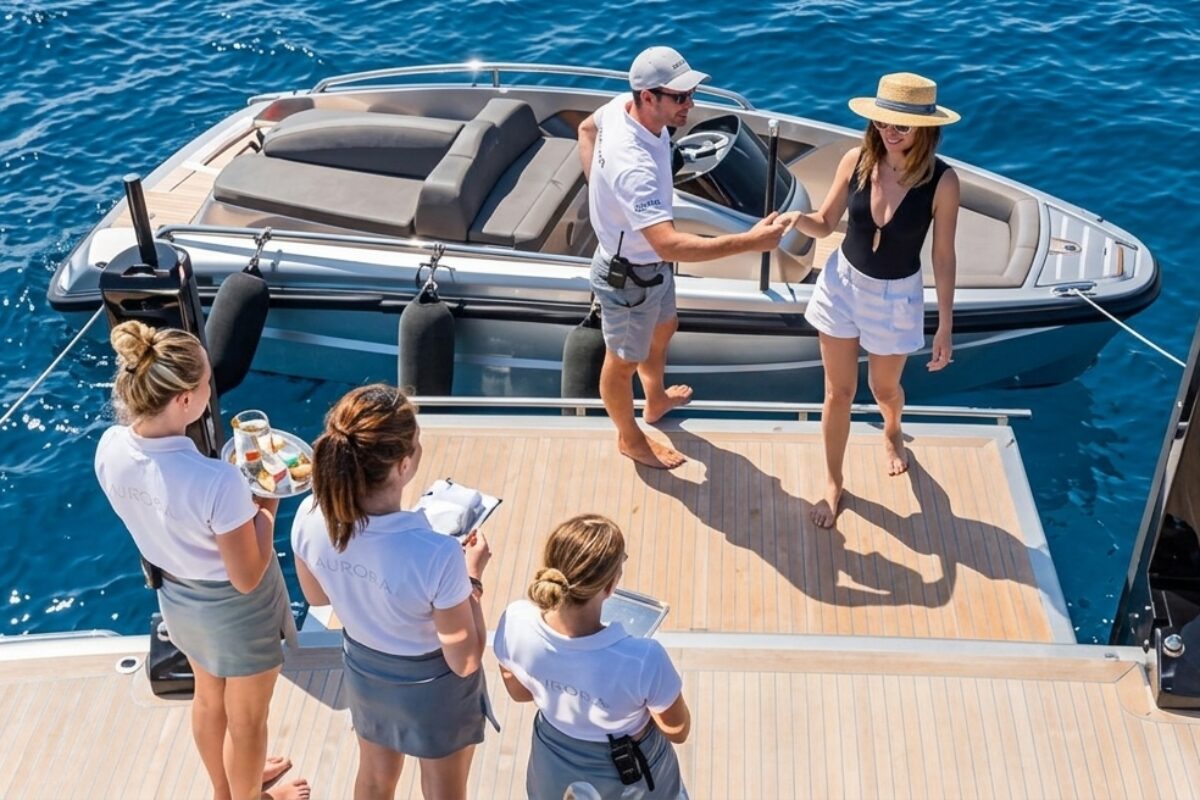
When guests are onboard, the workload is non-stop. The interior crew handles constant silver service, laundry, and deep cleaning, while the deck department manages heavy water sports equipment, mooring operations, and midnight watches, leading to significant physical fatigue.
This exhaustion is combined with a total lack of personal space. Living in shared crew cabins means your roommate is usually your direct work colleague, and cabins are usually shared with fellow crewmates.
Your private space is limited to a small bunk bed and a narrow locker. You are never truly alone, and there is no private space to decompress after a high-stress shift, which can sometimes make work-life balance incredibly difficult and lead to tension among the crew.
Finally, the emotional strain of long ocean crossings and changing schedules can cause feelings of isolation. The crew can spend months away from home, away from family and friends.
Because of unpredictable travel itineraries and limited satellite internet connectivity at sea, you will regularly miss birthdays, holidays, and family milestones, which can place a strain on your support systems back home.
How do the pros and cons shift between working on private vs. charter superyachts?
The daily lifestyle of a yacht crew member depends heavily on whether the vessel operates as one of the private yachts in an owner’s program or among charter yachts serving paying guests.
- The Private Yacht Experience: Private vessels are used only by the owner, their family, and close guests. The cruising schedule is usually more relaxed, guest counts are lower, and the daily routine is highly predictable, so the crew receives tips less often or not at all. This environment reduces the risk of yacht crew mental health and burnout, offering a stable lifestyle.
- The Charter Yacht Grind: Charter boats run as high-end commercial businesses, rented out to different paying clients throughout the season. The pace is intense, guest turnaround days are tight, and client demands can change rapidly. However, working on a yacht in the yacht charter market can bring in more money through gratuities on top of a crew member’s base salary, making these vessels the ideal target for crew members focused on aggressive, short-term savings.
How does proper safety and interior training directly minimize the disadvantages of yachting?
Many green crew members head overseas holding only a basic safety certificate and an ENG1 medical certificate, which ensures fitness to serve at sea. Because they lack specialized training, they often face a competitive bottleneck in entry-level positions, which can make them desperate enough to accept roles on poorly managed, underfunded vessels. These low-tier boats frequently ignore rest regulations, operate with sub-standard safety measures, and tolerate stressful workplace cultures.
You can directly minimize these disadvantages by entering the job market with advanced, professional training.
Completing technical modules, such as an intensive superyacht stewardess programme or advanced exterior deckhand courses, instantly signals high value to premium captains, and experience in luxury hotels can also help secure a yacht job.
When you hold verified operational skills, you gain the leverage needed to target professional, well-funded vessels.
Top-tier yachts respect international maritime rest laws, provide clear rotation structures, offer comprehensive medical coverage, and actively support crew welfare, while practical trade skills like carpentry and plumbing are highly sought after on professional vessels, helping to reduce the primary disadvantages of living at sea.
How do you weigh the pros and cons to decide if a superyacht career is right for you?
If you are trying to decide if this career path matches your lifestyle, it is helpful to look at it through a practical, time-bound framework.
Many successful crew members treat yachting as a structured two-to-five-year financial launchpad designed to eliminate student loans, fund a down payment on property, or secure the capital needed to start a land-based business in South Africa.
The Essential Character Checklist
Before booking your STCW course in Cape Town or scheduling your maritime medicals, use this quick self-test to check your personal fit for the industry, because this career is not for everyone.
- Resilience Under Pressure: Can you remain polite, calm, and highly professional during an unexpected schedule change late at night?
- Strong Attention to Detail: Do you take pride in precision, and are you comfortable deep-cleaning the same luxury spaces repeatedly?
- Adaptable Team Mindset: Can you live and work productively alongside diverse personalities in a confined, high-pressure environment?
- Respect for Structure: Are you comfortable taking direction from senior crew members, following direct orders from superior officers, and acting on constructive feedback without taking it personally?
Frequently Asked Questions
Is working on a superyacht dangerous, or are there strict maritime safety rules?
Superyacht operations are governed by rigid international safety frameworks regulated by the International Maritime Organization (IMO). Every vessel must perform mandatory weekly emergency drills, maintain strict safety compliance checks, and carry advanced survival equipment.
Completing an accredited course teaches you these universal safety protocols, including first aid and fire safety, ensuring you are fully prepared to handle onboard risks safely.
Do you actually get to enjoy the destinations your superyacht visits?
Your ability to explore depends on the yacht’s current schedule. During busy guest trips, your time will be fully dedicated to your duties on board.
However, between guest trips, during “boss-off” periods, or when the vessel is docked for winter maintenance, crew members regularly receive time off to explore local ports, beaches, and tourist attractions.
How many long hours a day do entry-level yacht crew members typically work during charter season?
During an active charter trip, entry-level crew members regularly work between 12 and 16 hours per day. International maritime labor standards (such as the Maritime Labour Convention, or MLC) state that crew must receive a minimum of 10 hours of rest in any 24 hours and 77 hours of rest in any 7 days, though these limits are heavily tested during peak seasons.
In many entry-level positions, deck hands commonly earn about $1,300 to $3,000 monthly, depending on vessel size and program.
What happens if you don’t get along with your cabin mate on a superyacht?
Living in confined quarters requires a high degree of maturity, respect, and open communication. Cabin disputes are usually escalated through department heads, such as the chief stewardess for interior staff or the first officer for the deck department, before reaching the captain.
The captain is the senior-most crew member; the chief engineer leads the engineering department, stewards handle food and beverage service, and on larger yachts, the purser manages all financial operations on board, while on smaller yachts, those duties are often combined.
If serious personal conflicts arise that affect the harmony of the vessel, crew members are expected to address the matter professionally through their department heads. If a resolution cannot be found, senior officers may adjust cabin arrangements during a transition period.
Does working on a superyacht cause severe burnout, and how do crew handle it?
The continuous high-stress environment and long hours can lead to burnout if left unmanaged. A professional crew handles this risk by prioritizing sleep during their rest hours, exercising regularly, avoiding excessive alcohol during time off, and utilizing the mental health support systems or counseling applications provided by modern yacht insurance packages.
Final Thoughts
Weighing the pros and cons of the superyacht industry shows that while the financial rewards and travel opportunities are life-changing, they are earned through hard physical work, discipline, and emotional grit.
For individuals with a strong work ethic and the right mindset, the sacrifices are well worth the incredible financial flexibility the career provides.
Before launching your job search in international hiring ports, make sure you hold the competitive qualifications that premium vessels look for.
For clear guidance on finding the right course track for your background, contact Certified Training today and speak to an expert advisor about matching your training to your chosen yacht crew pathway.