

A superyacht may look effortless from the outside, but that depends on someone managing the details behind the scenes.
A yacht purser plays that role by overseeing finances, paperwork, crew administration, logistics and guest-related planning, making the position important because it keeps the yacht compliant, organised and running smoothly while senior crew stay focused on their core responsibilities.
Completing your STCW basic safety training introduces this structured environment early, even if a senior role such as purser is still several career steps away.
Often described as a senior administrative position, the purser can be responsible for accounts, financial organisation, port clearance and compliance paperwork, payroll, crew administration, logistics and guest planning.
On larger yachts, that workload is too demanding to sit comfortably alongside another department head’s main duties, so a dedicated purser provides the administrative control needed to support both daily operations and the onboard experience.
For anyone planning to start or progress a superyacht career, especially crew interested in administrative, financial or logistical roles, understanding this position helps clarify where it fits within the industry and what it takes to move into it.
The guide explains the core responsibilities, the qualifications and skills employers look for, the training pathways into the role, and how career progression works for pursers in the superyacht sector.
What Are the Core Responsibilities of a Superyacht Purser?
Superyacht purser duties are mainly administrative, financial and logistical. The exact responsibilities can change between yachts, but the position is generally designed to take ownership of work that would otherwise be spread across the captain, senior interior crew and shore-based management.
A yacht purser job description may therefore look slightly different from vessel to vessel. What stays consistent is the need for organisation, accuracy and the ability to work across several departments without losing track of details.
This is what makes the purser different from a general office administrator. The work is happening inside an active yacht environment where guest plans, crew movements and operational requirements can change quickly.
How Does the Purser Handle Financial Management and Onboard Accounting?
Financial administration is a major part of many purser roles, and the purser is primarily responsible for financial matters on board.
Superyacht financial management at sea can involve keeping financial information organised, monitoring expenses, and helping different departments maintain clear spending records. The purser may also work alongside shore-based management or accounting teams so that the yacht’s records remain properly coordinated.
Day-to-day financial responsibilities can include monitoring departmental expenses, organising invoices and receipts, keeping track of cash movements and helping ensure that financial records remain accurate. In many cases, pursers are also expected to work confidently with accounting software such as Xero or QuickBooks.
The important skill is consistency. A yacht can have several departments purchasing supplies and managing operational needs at the same time. Without a central system, small pieces of financial information can quickly become difficult to follow.
The purser helps bring that information together so senior management has a clearer picture of what is happening financially onboard, and advanced computer skills, especially in Excel, support accurate financial administration.
How Do Pursers Manage Port Clearances, Customs, and Maritime Compliance?
Moving between destinations involves more than plotting a route and arriving at the next marina. International yacht operations can require customs, immigration, and other administrative documents to be prepared correctly.
Maritime port clearance and customs administration may form part of the purser’s responsibilities, depending on how duties are divided onboard. This can include helping organise crew and passenger information, immigration documents and the paperwork required when entering or leaving a destination.
The purser can also support the administrative side of vessel compliance and security procedures. Overall responsibility still sits within the yacht’s command and management structure, but organised paperwork helps prevent avoidable delays.
This is one of the areas where detail matters. A missing document may look like a small administrative mistake in the yacht office, but it can become a much bigger operational issue when the vessel is preparing to move.
Why Is the Yacht Purser Role Essential to Superyacht Operations?
The purser becomes especially valuable when the administrative workload reaches a point where it needs dedicated attention, supporting the smooth running of yacht operations by centralising administration.
A captain has operational and command responsibilities. The interior team has guests and service standards to manage. Shore-based yacht management may also be coordinating wider administrative requirements.
The purser provides a central point for much of the information moving between these areas, which reflects the role of a purser as a key management position rather than simple support.
In practice, this makes the role similar to a superyacht administrative officer. The purser helps ensure the administrative side of the yacht keeps pace with everything happening operationally.
How Does a Purser Unburden the Captain and Chief Stewardess?
The captain carries overall responsibility for the vessel. Navigation, safety, crew leadership, compliance and operational decision-making already create a demanding workload.
The Chief Stewardess has a different set of priorities. The role is centred on interior operations, guest service, housekeeping standards, provisioning and managing the interior team.
Understanding yacht purser vs chief stewardess responsibilities comes down largely to where their attention is focused. The Chief Stewardess concentrates on delivering the interior and guest experience, while the purser takes greater responsibility for administration, accounts, paperwork and logistics.
There may still be overlap between the two positions, particularly depending on the size and structure of the yacht. On smaller yachts, these duties are often handled by the chief stew or captain. A dedicated purser, however, can remove a significant amount of administrative work from senior crew.
That gives the captain more room to focus on command and allows the Chief Stewardess to concentrate on interior operations rather than constantly switching between service and paperwork. Many pursers move into the role from Chief Stewardess positions.
How Does a Purser Enhance the VIP Guest and Owner Experience?
Good yacht administration should rarely be obvious to the guest.
When arrangements run smoothly, transport is organised, guest information is available, and plans happen without confusion, the experience feels simple. Behind that simplicity is often a considerable amount of preparation.
The purser can help organise guest preferences, destination information and shore-side arrangements. Depending on the yacht and programme, this may involve planning guest trips. It can also include coordinating guest activities. For destination logistics, the purser may liaise with port agents as well as local providers.
Pre-arrival planning can also help the crew understand what needs to be arranged before guests reach a destination, including checking transport options in advance. On private yachts, this planning may involve more direct coordination with yacht owners or an owner’s representative. Instead of reacting to requests after arrival, the yacht can prepare in advance.
The purser may not personally deliver every part of the guest experience, but a strong organisation gives the service team what they need to deliver it well.
What Crew Management and HR Duties Does a Purser Oversee?
A yacht is both a luxury environment and a working vessel. Behind every department is a crew that needs contracts, travel arrangements, records, and professional documentation kept in order.
Yacht crew HR and logistics therefore form another important area of purser administration, with the purser often working in a role similar to an HR manager for crew administration. Some pursers also move into the role from other departments, not only the interior team.
The purser may work closely with the captain, department heads, and shore management to make sure the administrative side of crew movement remains organised.
This becomes increasingly important as crew numbers and movements grow, especially when managing crew scheduling alongside crew movement and records.
How Do Pursers Manage Crew Travel, Visas, and Onboarding?
Crew regularly join and leave yachts throughout their careers. Each change can create new travel arrangements, documents, and administrative tasks.
Depending on the vessel, the purser may assist with flights, visa information, joining instructions, contracts, and crew records. They may also help maintain information relating to professional certificates and other documents needed for employment onboard.
Keeping certifications organised is particularly important. A crew member’s STCW certificate is part of their professional maritime documentation, and senior crew need visibility over whether the appropriate paperwork is current and available.
A good administrative system helps prevent urgent document searches just before someone is due to travel or join the vessel.
The same principle applies to discharge and employment records. Crew should know where their documentation stands rather than trying to rebuild their service history months later.
What Role Does the Purser Play in Payroll and Crew Welfare?
Payroll administration naturally connects the financial and HR sides of the purser role.
Depending on the yacht’s management structure, the purser may help organise payroll information, crew expenses and reimbursements before those details are processed through the appropriate accounting or management system.
Crew welfare also has an administrative side. Contracts, medical information, insurance documents and other employment records need to remain organised and accessible to the relevant people.
Strong administration does not replace good leadership or a healthy onboard culture. It does, however, remove unnecessary friction.
Crew members should not need to repeatedly chase basic paperwork, missing expense information or employment records. When administration works properly, it allows people to concentrate more fully on their actual jobs.
What Qualifications and Skills Are Needed to Become a Yacht Purser?
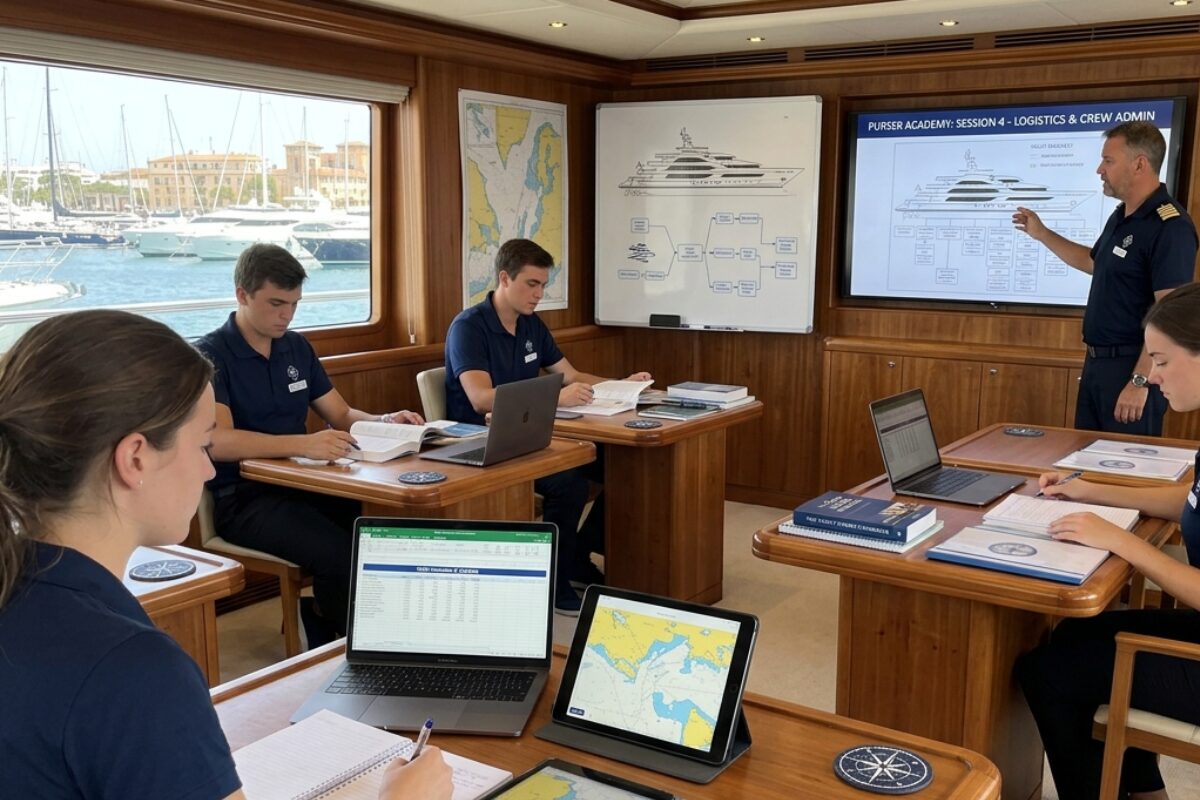
A purser is a senior management position, which means most candidates need more than an entry-level qualification before they are ready for the role, and employers usually look for both onboard experience and strong administrative judgment.
Experience aboard yachts is valuable because it helps candidates understand how different departments operate and how quickly priorities can change. Someone who has already worked in a senior interior, operational or administrative role will also have a better understanding of the standards expected onboard.
The strongest pursers tend to be highly organised, with organisational skills among the most important traits for the role, calm under pressure and comfortable handling sensitive information. They also need to communicate clearly with people across very different areas of the yacht.
Qualifications provide the foundation. Experience teaches you how to apply it.
What Prior Yachting or Hospitality Experience Is Required?
There is no single route that every yacht purser must follow.
Some candidates may progress through the interior department, where they gain experience with guest service, inventory, provisioning, team organisation and increasingly senior responsibilities, often after 1–2 seasons as a stewardess before moving toward senior administrative roles.
Others may bring relevant administrative or luxury hospitality experience before moving deeper into the yacht environment.
Anyone entering professional yachting still needs the appropriate safety and medical foundation. Someone researching an STCW course Cape Town option should first understand how that initial qualification fits into the wider requirements for working professionally at sea.
A valid STCW Basic Safety Training certificate is mandatory for working onboard, covering core areas such as first aid, firefighting and sea survival. An appropriate seafarer medical, often issued under standards linked to the coastguard agency, is another important part of confirming fitness for work onboard.
These entry-level requirements do not make someone ready to become a purser. They provide the foundation on which a longer yacht career can be built.
What Specialized Purser Training and Software Skills Are Necessary?
Once crew members move beyond the entry level, training can become increasingly specialised.
Advanced interior and administrative development may include recognised professional pathways such as IAMI GUEST programs. Anyone specifically researching an IAMI GUEST purser program should check the current program structure and entry requirements before assuming that one route applies to every purser position.
A typical purser course lasts 3–5 days. Depending on a candidate’s background, additional training and other courses can also complement that specialist route.
Administrative confidence is equally important. Pursers work with financial information, crew records, schedules and operational documents, so they need to be comfortable using the systems required by the yacht.
The exact software can vary between vessels and management companies. It is therefore more useful to develop strong organisational and administrative ability than to assume every yacht will use the same platform.
Training also needs to be planned financially. When comparing STCW course prices, use current course details from the training provider rather than older online references.
Career development works better when both the qualification and its purpose are clear before you book it.
How Does Accredited Maritime Training Help You Advance to Purser?
Senior yacht positions are built gradually.
A new crew member first needs to understand professional yacht standards, safety, and their own department. With experience, they can take on more responsibility, complete additional qualifications, and move towards leadership or specialist roles.
A relevant yachting course can therefore be useful at different points in the journey, but it should match the level of responsibility you are working towards.
The mistake is thinking that one course creates an entire career. Training gives you tools. Onboard experience teaches you when and how to use them.
Why Is a Strong Foundation in Interior and Safety Training Critical?
Even a role centred on administration exists within a working vessel. STCW training gives crew the safety foundation needed to operate professionally at sea, while role-specific interior or deck training helps people understand what is expected within their department.
That knowledge becomes useful later because a purser does not work in isolation. Financial information comes from departments. Crew documentation relates to people working across the vessel. Guest logistics need to support the service team.
Understanding the yacht environment makes the paperwork more meaningful. For someone starting from scratch, a structured yacht training pathway can help establish that foundation before more specialised career decisions are made. It also supports later transitions into shore-based roles for pursers who move into yacht administration off the vessel. Certified Training offers entry-level and advanced superyacht training options for crew building their careers, but the priority should always be choosing training that matches your next realistic step rather than collecting qualifications without a plan.
When researching an STCW course price, consider the qualification in the context of the wider career path rather than treating cost as the only deciding factor.
The right foundation makes later progression much easier to understand.
FAQs
What is the main role of a yacht purser and why is it important?
Generally speaking, the role of a purser is to oversee the yacht’s administrative, financial and logistical systems aboard a superyacht.
The role may include financial organisation, paperwork, crew administration, guest logistics and coordination with shore management, and the purser may be primarily responsible for keeping those processes coordinated onboard. This allows other senior crew to focus more closely on their own operational responsibilities.
The purser is important because well-organised administration supports almost every department without becoming part of the guest-facing experience.
What is the difference between a Chief Stewardess and a Yacht Purser?
The Chief Stewardess primarily manages the interior department and guest-service standards.
The purser focuses more heavily on administration, accounts, paperwork, logistics and crew-related organisation. On some yachts, elements of the two jobs may overlap.
As the administrative workload increases, separating the roles can allow both senior crew members to concentrate more fully on their main responsibilities.
On what size superyachts do you usually find a Purser?
Purser roles are more commonly associated with larger yachts where the volume of financial, logistical and crew administration justifies having someone dedicated to it.
There is no single vessel size that automatically determines whether a purser will be onboard. Crew numbers, yacht operations and management structure can all affect how administrative responsibilities are divided.
Do you need a degree to become a yacht purser?
A university degree is not presented as a universal requirement for becoming a yacht purser, although a degree in business or accounting can still help catch the attention of the decision maker.
Relevant yacht experience, strong administration skills, professional training and a clear understanding of onboard operations can all contribute to progression into the role.
For anyone still at entry level, the priority should be establishing the correct safety foundation, gaining genuine onboard experience and gradually building responsibility.
How much does a yacht purser earn?
Purser earnings can vary according to the yacht, role, responsibilities and individual experience, but a typical range is €4,000 to €8,000 per month.
On charter yachts, pursers may also receive an additional $5,000 to $10,000 in tips.
Because the scope of the job can differ considerably between vessels, one salary figure is not useful for every position. Candidates should evaluate the responsibilities of the individual role rather than assuming every purser position is directly comparable, as yacht size, the size of the boat, and experience or specialist skills can all lead to higher salaries.
What certifications do I need to work as a yacht purser?
Professional yacht crew members need the appropriate maritime safety training and medical certification before stepping on board.
An STCW course is the mandatory starting safety qualification, and Basic Safety Training includes first aid, while further training will depend on your role, experience and responsibilities. Some positions may require additional security or specialist training.
Keep every STCW certificate and medical document, including the ENG1 issued under Maritime and Coastguard Agency standards, organised throughout your career. As responsibilities increase, maintaining clear professional records becomes increasingly important.
Conclusion
The yacht purser is one of the people working quietly behind the scenes to keep a complex operation organised. Finance, crew administration, paperwork, port logistics and guest planning may look like separate jobs, but they regularly connect.
The purser helps bring those areas together so that the captain, department heads and shore management can work with accurate information.
For anyone interested in the role, the career path starts with understanding professional life at sea. Complete the appropriate STCW course, build genuine onboard experience and develop strong organisational habits before looking towards specialist administrative responsibilities.
From there, training should become increasingly targeted. Certified Training can support the early stages through its superyacht training pathways, while experienced crew can continue building the qualifications and practical knowledge appropriate to their next role.
The goal is not to rush towards a senior title. Build the foundation properly, learn how yacht operations work, and become the person who can keep complicated things organised when everyone else is busy making the experience look effortless.