

Understanding the STCW Maritime English Requirement
The sea doesn’t forgive poor communication. One misunderstood order or unclear radio message can trigger maritime accidents that threaten lives and property. That’s why the STCW Maritime English Requirement was developed under the International Convention on Standards of Training, Certification and Watchkeeping for Seafarers; it sets the competence required for every person working at sea.
The STCW Maritime English Requirement is established as a regulation within the STCW Convention, forming the basis for mandatory standards in training, certification, and safety procedures.
The STCW Convention, adopted by individual governments through the International Maritime Organization (IMO), ensures that seafarers across the maritime industry meet unified safety standards. Within it, English language proficiency isn’t just helpful; it’s crucial. Maritime English is the common language that connects diverse crews, ship operators, and shipping companies worldwide.
From ship-to-ship communication to emergencies and navigational watchkeeping, the ability to communicate effectively saves lives. The revised STCW Convention gives additional emphasis to English language skills as part of every basic training course, especially for crew members who must operate safely and efficiently at sea.
STCW Standards That Define the Maritime English Requirement
The STCW Convention clearly outlines how English language proficiency is integrated into maritime training courses. Tables A-II/1 and A-III/1 specify what officers and ratings must demonstrate in Maritime English competence.
Deck officers must understand English well enough to issue clear communication, interpret manuals, and use Standard Marine Communication Phrases (SMCP) or IMO SMCP in real maritime operations. Engine officers and ratings must use English accurately in reporting, equipment operation, and safety communication. This language competence is a crucial part of their certification and demonstrates the ability to work effectively under the ISM Code.
Radio operators play a critical role in emergencies, where English phrases and clear communication are vital. When every second counts, being able to communicate effectively in the English language prevents confusion and potential accidents.
Who Needs to Meet the STCW Maritime English Requirement
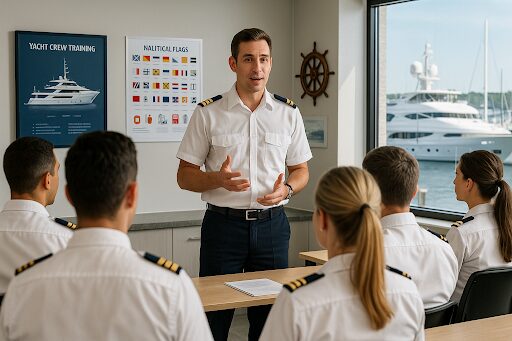
All seafarers who undergo training certification and watchkeeping courses must demonstrate English proficiency. This includes:
- Deck officers and ratings are responsible for navigational watchkeeping
- Engine room personnel maintaining ship systems
- Communication officers and radio operators managing emergency traffic
- Superyacht and cruise industry crew members delivering hospitality and safety onboard
The level of English language competence varies depending on rank and responsibility. Masters and officers must show advanced communication skills to lead teams, understand regulations, and coordinate ship-to-ship operations. Ratings and support crew must be able to understand English for basic safety, personal survival techniques, and social responsibilities. Training programs often include task-based assessments to ensure seafarers are prepared for their specific duties and responsibilities. In every case, clear communication ensures safety and operational efficiency.
Assessing English Proficiency Under STCW
Assessing English proficiency under the STCW Convention involves more than vocabulary; it measures the practical ability to communicate under stress. Training centres use a range of assessment methods, including oral exams, written reports, and simulated exercises.
Approved flag states or maritime academies often use recognized assessments like the Marlins English Language Test or the ICS Marlins Test to evaluate proficiency. These tests assess listening, speaking, and comprehension, vital for safe communication on board. Some programs also include practical drills during basic training courses, combining language and emergency communication exercises.
Results are recorded as part of certification under the standards of training certification and watchkeeping. A seafarer’s ability to communicate effectively in English directly affects their eligibility for positions on board ships.
Maritime English Training and Preparation for Seafarers
Maritime English training is designed to prepare seafarers for communication in real maritime operations. It focuses on practical scenarios rather than academic grammar. Training courses approved under the STCW Convention teach maritime English vocabulary, Standard Marine Communication Phrases, and how to use English in emergencies.
These programs often include exercises for bridge communication, emergency drills, and simulations of distress calls. Crew members practice personal safety and emergency communication to ensure they respond quickly during real incidents. Maritime English training also includes modules in personal survival techniques and basic firefighting, key components of the STCW Basic Training course.
Non-native speakers can improve their communication skills by taking extra training courses or using e-learning tools. The Marlins Test and other recognized English assessments help measure progress. Every seafarer should aim to understand English well enough to operate safely and communicate efficiently in multinational crews.
Challenges in Meeting the STCW Maritime English Requirement
Meeting the STCW Maritime English Requirement can be challenging, especially for those for whom English is a foreign language. Many crew members struggle with pronunciation, vocabulary, and comprehension during high-pressure operations.
Common challenges include language barriers, communication failures, and misunderstanding technical phrases. These issues can lead to maritime accidents or reduce operational efficiency. Poor communication has been identified by the shipping industry as a major contributor to accidents at sea.
Solutions include regular training, refresher courses, and the consistent use of Standard Marine Communication Phrases during operations. Encouraging English use in daily shipboard communication helps develop confidence naturally. When crew members communicate effectively on board, safety and efficiency improve.
STCW Compliance, Certification, and Enforcement
Compliance with the English language requirements of the STCW Convention is verified by flag states and Port State Control. Inspectors often test seafarers’ communication skills during shipboard visits, asking safety-related questions or issuing instructions in English.
Ship operators must ensure that their personnel maintain language proficiency. Failure to comply can result in certification delays, fines, or operational restrictions. The ISM Code also holds companies accountable for ensuring effective communication among their crew members.
Meeting the English language requirement isn’t just about compliance; it’s about maintaining maritime safety. Clear communication between crew members, officers, and port authorities reduces the risk of maritime accidents and improves operational efficiency.
STCW Certificate Validity and Renewal
STCW certificates are not a one-time achievement; they are valid for five years and must be renewed to ensure that seafarers remain up to date with the latest safety and operational standards. The renewal process typically involves completing refresher or revalidation training, especially in core areas such as Basic Training.
This ongoing assessment is crucial for maintaining the high standards set by the International Convention on Standards of Training, Certification and Watchkeeping for Seafarers (STCW).
To keep your certification current, you’ll need to demonstrate continued competence in essential skills, including Maritime English and effective communication. These abilities are assessed through both practical exercises and formal training courses, ensuring that seafarers can communicate clearly and respond effectively in any situation at sea.
Consulting with a maritime training advisor is highly recommended to make sure you meet all requirements for renewal and maintain your endorsements without interruption.
Continuous training and assessment are not just regulatory requirements; they are vital for personal safety, operational efficiency, and the overall safety of the maritime industry. By staying current with your STCW certification, you demonstrate your commitment to professional standards and your ability to perform your duties safely and competently.
Maritime Industry Careers and Opportunities
A career in the maritime industry opens the door to a world of opportunities for those with STCW training and certification. Whether you aspire to become a deck officer, engineer, or work in the cruise industry, the maritime sector offers a dynamic and rewarding environment.
Seafarers with STCW endorsements can serve on a wide range of vessels, from cargo ships and tankers to passenger ships, each presenting unique challenges and career paths.
Specializing in areas such as navigational watch, emergency response, or maritime safety can lead to advancement and greater responsibility. The industry values personnel who possess strong communication skills and proficiency in Maritime English, as these are essential for safe and efficient maritime operations.
Tools like the Marlins English Language Test and the IMO Standard Marine Communication Phrases (SMCP) are widely used to assess and improve English language skills, helping seafarers excel in multinational crews and complex operational settings.
Ongoing professional development through training courses and certification programs is encouraged, allowing you to expand your expertise and move up the ranks. Effective communication and a solid grasp of Maritime English not only enhance safety but also open doors to leadership roles and specialized positions within the shipping and cruise industries.
In the maritime world, your ability to communicate and collaborate is just as important as your technical skills, making language proficiency a key asset for a successful and fulfilling career at sea.
Evolving Standards and Future Developments
The maritime industry continues to evolve, and so do its language and training standards. The Manila Amendments to the STCW Convention and ongoing IMO updates aim to improve communication competence globally.
Future developments include AI-driven language assessment tools, e-learning simulations for emergencies, and interactive Marlins English Language Test systems. The focus is on practical English use, ensuring crew members can communicate clearly, not just pass exams.
As shipping companies adopt more digital platforms, there’s additional emphasis on communication skills and cultural understanding. Effective communication remains central to safety, and the ability to communicate across accents, languages, and stress conditions is increasingly vital.
Practical Tips for Meeting the STCW Maritime English Requirement
If you’re preparing for certification or aiming to improve your maritime English, here’s what works:
- Enroll in accredited Maritime English training courses through approved centres.
- Practice Standard Marine Communication Phrases daily to reinforce confidence.
- Participate in simulations that combine language with emergency drills.
- Study maritime operations materials in English to expand vocabulary.
- Take the Marlins Test to assess your progress and proficiency level.
- Focus on clarity and accuracy; clear communication matters more than accent.
- Learn collaboratively. Practicing with other crew members improves fluency.
Training institutions can also improve outcomes by integrating realistic bridge communication scenarios and continuous assessment. Combining communication with safety training, like basic firefighting or personal survival techniques, helps reinforce the importance of language in safety-critical tasks.
FAQs
- What is the STCW Maritime English Requirement?
It’s the part of the STCW Convention that requires seafarers to demonstrate English proficiency in reading, writing, speaking, and listening according to their duties. - Which crew members must meet the STCW English requirement?
All certified seafarers, including officers, engineers, ratings, and radio staff, must meet the English language standards outlined in the STCW Convention. - How is English proficiency tested for STCW certification?
Assessments include oral and written exams, onboard evaluations, and simulations conducted by recognized training centres or flag authorities. - What level of English do officers need for watchkeeping?
Officers need to give and interpret orders, communicate using Standard Marine Communication Phrases, and understand technical documents and radio calls. - What happens if a crew member fails to meet the English standard?
They may face certification delays, restricted duties, or operational penalties. Regular training and practice are essential for maintaining compliance.
The Importance of English in Maritime Safety
At sea, effective communication is life-saving. Every command, report, and emergency response depends on the ability to communicate clearly. The STCW Maritime English Requirement ensures that crew members from around the world share a common language for safety and coordination.
Mastering maritime English builds confidence, competence, and compliance. It helps prevent accidents, enhances operational efficiency, and creates career opportunities. In the end, language connects the maritime world, from superyachts to cargo ships, from bridge to engine room.
So let’s keep it simple: learn it, practice it, and communicate effectively. Because in the maritime industry, English isn’t just another skill; it’s the language of safety, teamwork, and success.