
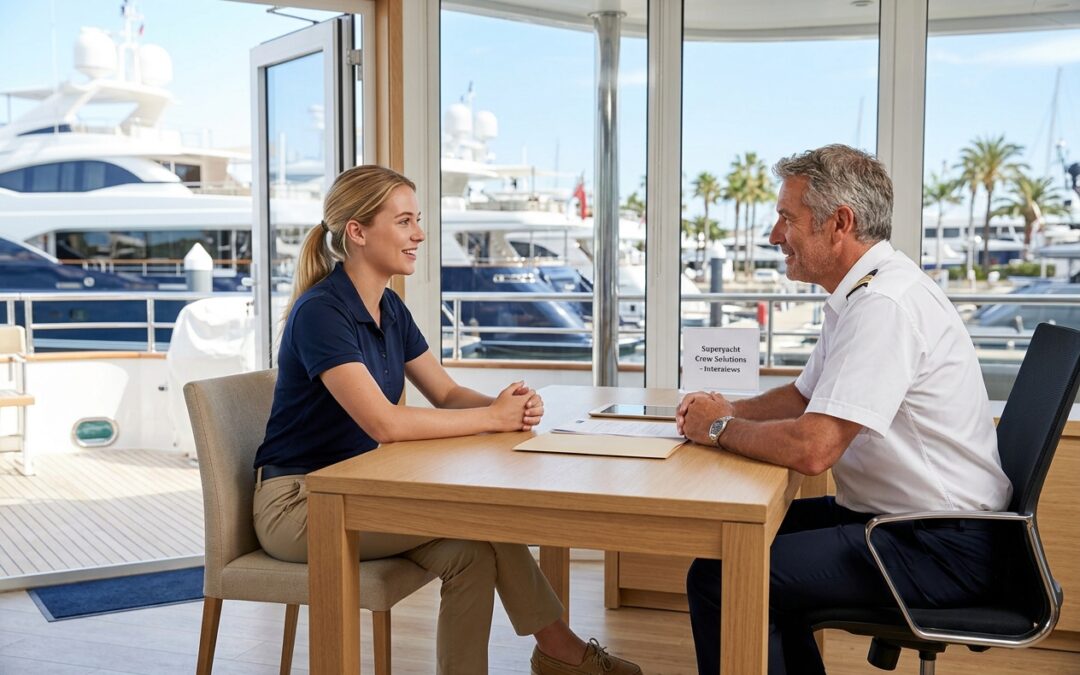
Your first superyacht interview can feel like a big moment, and it is. Whoever sits across from you is trying to picture you onboard: in front of guests, in the crew mess, and at the end of a long day when everyone is tired. Most of what they’re looking for can be prepared for.
At Certified Training, we help new crew prepare for the international superyacht industry, and interview preparation is a big part of that. Here’s how to walk into your first one ready.
What Happens in a Superyacht Interview?
There’s no single format for a yacht crew interview. Depending on the yacht and the role, you might speak to the captain, the head of the department you’d be joining, or a crew agency first. Some interviews happen in person on the dock or onboard. Others take place over a video call.
What stays the same is what the interviewer is trying to work out. Your skills matter, but they’re only part of the picture. Crew share cabins, eat together, and work long days side by side, so personality, attitude, and crew fit carry a lot of weight.
Sometimes the most useful interview isn’t a conversation at all. Daywork, which means short-term paid work onboard, often acts as a practical trial. A strong day can earn you a reference and a recommendation for future roles.
In-person interviews and daywork take place in the international yachting hubs where crew go to look for work. Many people complete their training in Cape Town first, then travel to those hubs with their certificates ready to start job hunting.
How Should You Prepare for Your First Yacht Crew Interview?
Preparation is where most of your confidence comes from. Start by learning what you can about the yacht and the role. A deckhand interview and a stewardess interview cover very different ground, so be clear on the day-to-day duties of the position you’ve applied for.
Next, know your CV inside out. The interviewer may pick any line and ask you to talk about it. This is your chance to explain transferable experience in yachting terms. Years of restaurant work become proof that you can handle high-pressure interior service. Construction or painting experience shows you’re ready for deck maintenance.
Have your paperwork organized and ready to show:
- Your STCW certificate, PDSD certificate, and any other course certificates
- Your ENG1 medical certificate
- Your passport and any visas you need for the region where you’re job hunting
- A printed copy of your CV
It also helps to understand how a yacht is run. Crew reports to their head of department, and heads of department report to the captain. Knowing this lets you answer teamwork questions with confidence.
Finally, prepare two or three thoughtful questions to ask at the end. Asking how the department works or what the yacht has planned for the season shows genuine interest.
What Should You Wear and How Should You Present Yourself?
Grooming standards onboard a superyacht are high, and your interviewer will notice your presentation before you say a word. Aim for clean, neat, and simple: pressed clothes, tidy hair, and a fresh, professional look. If in doubt, dress one step smarter than you think you need to.
Be on time. In practice, that means arriving early for an in-person interview or logging in a few minutes before a video call. Punctuality is one of the first signs of reliability, and reliability is something captains value highly.
Body language does a lot of quiet work. Make eye contact, smile, sit up straight and keep a friendly, calm manner, even if you feel nervous.
For video interviews, set yourself up properly beforehand. Choose a quiet spot with a tidy background, face a window or light source, and test your connection, camera and microphone before the call starts.
What Questions Might a Captain or Head of Department Ask You?
Every interviewer has their own style, but most questions fall into a few familiar themes:
- Motivation: Why do you want to work on a superyacht, and why this role?
- Experience: What have you done before, and how does it apply onboard?
- Teamwork: How do you get on with people in close quarters? How do you handle conflict with a colleague?
- Feedback and mistakes: Tell us about a time you got something wrong. What did you do next?
- Practical details: When are you available? Which certificates and visas do you hold?
The best answers are honest and specific. When you’re asked about a mistake, describe what happened, how you fixed it, and what you learned. Interviewers respect crew who own their errors far more than those who claim never to make any.
Prepare stories rather than scripts. Think of a few real examples from past jobs that show teamwork, reliability, or calm under pressure, then talk about them naturally. Memorized answers tend to sound stiff, and they’re hard to adapt when a question comes from an unexpected angle.
How Can You Show You’re the Right Fit for the Crew?
Telling an interviewer you’re a team player doesn’t prove much. Showing it does. Use real examples to demonstrate the soft skills crews depend on, such as communication, reliability, adaptability, a strong work ethic, and discretion.
Maybe you covered extra shifts when a colleague was sick, or calmed down an unhappy customer without losing your cool. Details like that stick.
If you’re new to yachting, say so. Being ‘Green Crew’, meaning new to yachts, isn’t a problem in itself. What interviewers want to see is a constructive attitude and a genuine willingness to learn.
Show that you understand the reality of yacht life, too. Long hours, shared cabins, and very high service standards are part of the job. A candidate who talks about these calmly comes across as someone who’ll last the season.
Respect for the chain of command should come through in how you describe past jobs. Mentioning how you followed a manager’s lead or supported a supervisor tells the interviewer you’ll settle into the yacht’s hierarchy.
Relevant yacht training helps here. Captains tend to choose recruits who already hold the right certifications and understand luxury service or deck work without needing constant supervision. Your courses also give you real material to talk about, from safety drills to service standards.
Whatever you do, don’t overstate your experience. Anything you claim in an interview, you may have to prove on your first day.
What Mistakes Should You Avoid in Your First Yacht Interview?
A few slip-ups come up again and again with first-time candidates:
- Arriving late or underprepared. Not knowing which role you applied for is a quick way to lose an interviewer’s interest.
- Calling yachting a paid vacation. Superyacht work is a professional career, not a gap-year adventure.
- Leading with perks. Talking about parties, travel or time off early in the conversation sends the wrong message.
- Criticizing past employers. Even if a previous job was difficult, keep your comments fair and professional.
- Exaggerating your skills. If you say you can drive a tender or handle silver service, expect to be asked to do it.
- Forgetting your online presence. Assume your social media could be seen, and make sure it matches the professional you’re presenting.
What Should You Do After a Superyacht Interview?
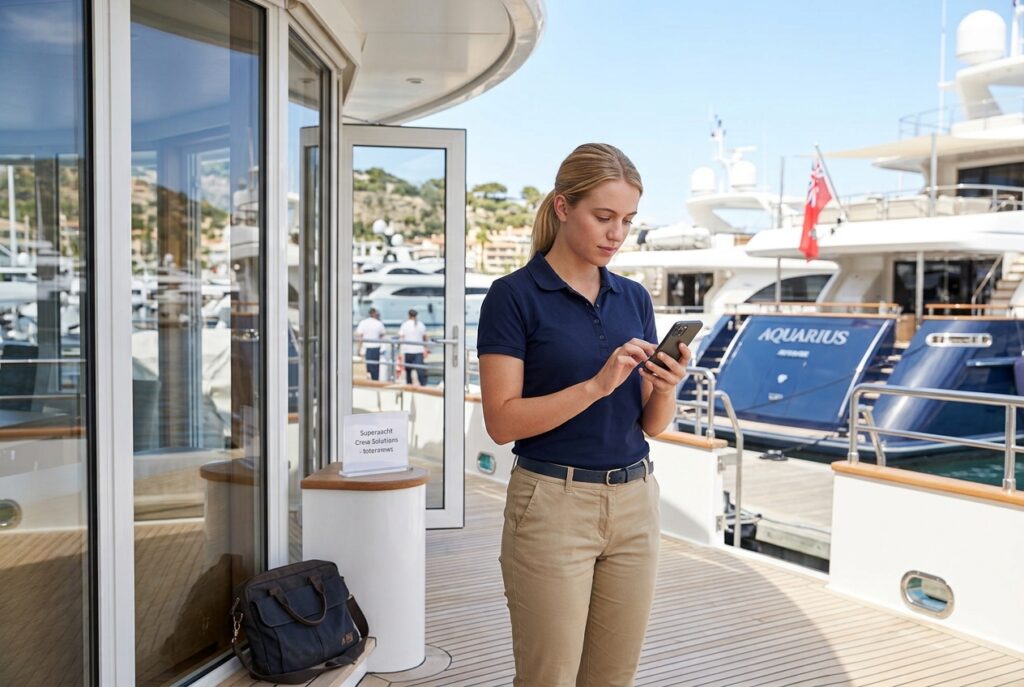
Send a short, polite thank-you message soon after the interview. Keep it simple: thank them for their time and confirm you’re still interested in the role.
Keep your crew agency profile and availability up to date. If your plans or location change, let your agencies know. An outdated profile can cost you an opportunity you never even hear about.
Stay ready for daywork or a trial if one is offered. Treat it as seriously as the interview itself, because it’s often the real test.
If you don’t get the job, take it professionally and ask for feedback where it feels appropriate. Then look back at the interview honestly. What went well? Which question caught you off guard? Each interview makes the next one easier.
Above all, don’t rely on a single route. Combining crew agencies, networking and daywork gives you far more chances than waiting on one application.
Frequently Asked Questions
How do I prepare for my first superyacht interview?
Research the yacht and the role, know your CV well, and have your certificates, medical, and visa details ready. Prepare real examples that show teamwork and reliability, plus a few questions of your own.
What questions are asked in a yacht crew interview?
Expect questions about your motivation, experience, teamwork, how you handle feedback, and your availability. Interviewers also want a sense of how you’d cope living and working closely with other crew.
What should I wear to a superyacht interview?
Keep it clean, neat, and professional, with tidy grooming. Simple, pressed clothing works better than anything flashy.
Who interviews new yacht crew?
It depends on the yacht. You might meet the captain, the head of the department you’d join, or a crew agency first.
What do captains look for when hiring green crew?
A professional attitude, reliability, a willingness to learn, and the right certifications. Showing that you understand the realities of yacht life also counts in your favor.
What documents should I have ready for a yacht interview?
Have your STCW and other course certificates, ENG1 medical, passport, visa details, and a copy of your CV on hand.
What questions should I ask at the end of a yacht interview?
Ask about the role, the department, or the yacht’s plans for the season. Save questions about time off and perks for later in the process.
Is daywork part of the yacht hiring process?
Often, yes. Daywork can act as a practical trial, and a strong performance can lead to a reference or a recommendation.
Can I get a yacht interview with no experience?
Yes. Everyone starts somewhere. The right certificates, a well-presented CV and transferable experience from land-based jobs all help you get noticed.
How should I follow up after a superyacht interview?
Send a brief thank-you message, keep your crew agency profile up to date, and stay available for daywork or a trial.
Conclusion
A first superyacht interview is less about having every answer and more about showing who you are: prepared, well presented, honest and easy to work with.
Know your CV, keep your documents in order, practice telling real stories about your work and treat any daywork as part of the interview. Then keep at it, and treat every setback as practice for the next conversation.
Much of that confidence comes from the groundwork you lay before you ever step onto a dock.
The right superyacht training academy gives you the certificates captains expect and a clear picture of how the industry works. If you’re getting ready for your first season, the Certified Training team would be glad to talk you through the courses that suit the role you’re aiming for.