
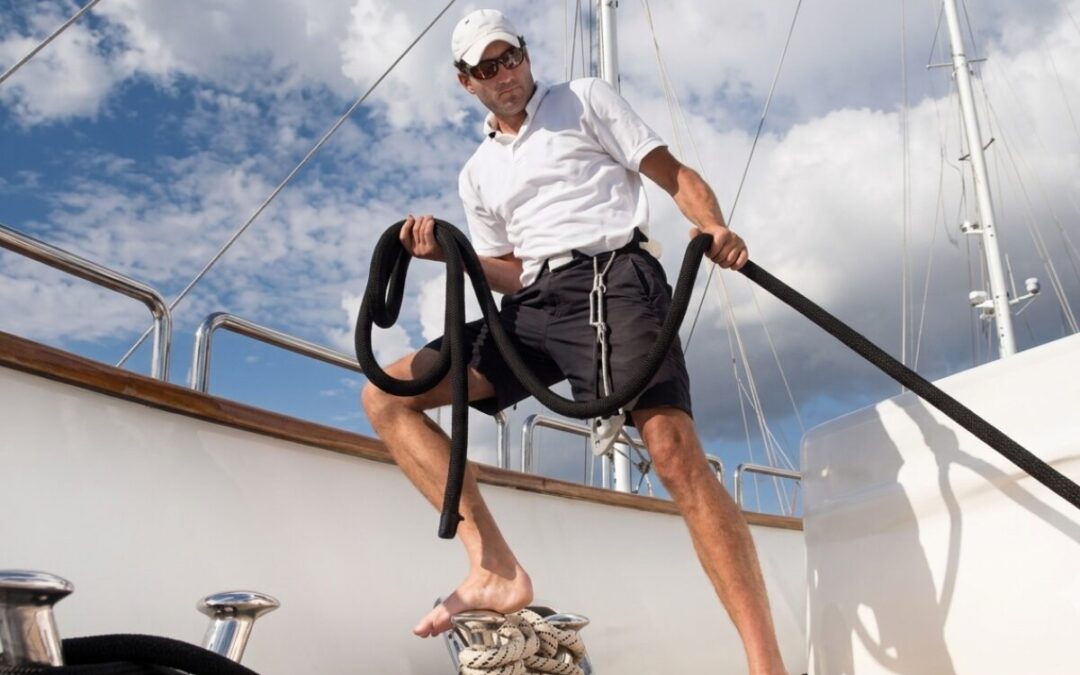
If you are looking for an active, hands-on career that takes you around the globe, working on the exterior of a luxury vessel is an incredible pathway. To decide if this career path matches your skills, you need a clear answer to a fundamental question: What does a Deckhand do?
While the superyacht lifestyle looks glamorous from the outside, the actual role requires high physical stamina, absolute precision, and strict discipline. Understanding the exact entry-level deckhand job description ensures you are fully prepared before starting your formal yacht training.
What is the core role of a superyacht deckhand on board?
At its foundation, a superyacht deckhand is the primary guardian of the vessel’s exterior. Superyachts are multi-million-dollar assets continuously exposed to harsh marine environments, salt water, and intense UV rays.
The deck department is directly responsible for keeping thousands of square meters of delicate marine paint, teak decking, custom stainless steel, and structural glass in absolute showroom condition.
This role is a unique professional hybrid. On any given day, a deckhand moves between being a detailed cleaning specialist, a high-end guest hospitality host, a water sports instructor, and a disciplined maritime watchkeeper.
You do not operate in isolation. The deckhand operates as a vital asset within a structured chain of command, taking direct operational orders from the Bosun or Chief Officer.
This teamwork ensures that the exterior department runs safely, efficiently, and to the flawless standards demanded by superyacht owners.
What does a typical daily schedule look like for a yacht deckhand?
The deckhand position is an essential role in the superyacht industry, and the day in the life of a yacht deckhand changes drastically depending on whether guests are onboard. However, during an active charter season, your routine follows a highly structured, sun-up to sun-down operational rhythm.
The Morning Washdown
05:00 AM – 08:30 AM
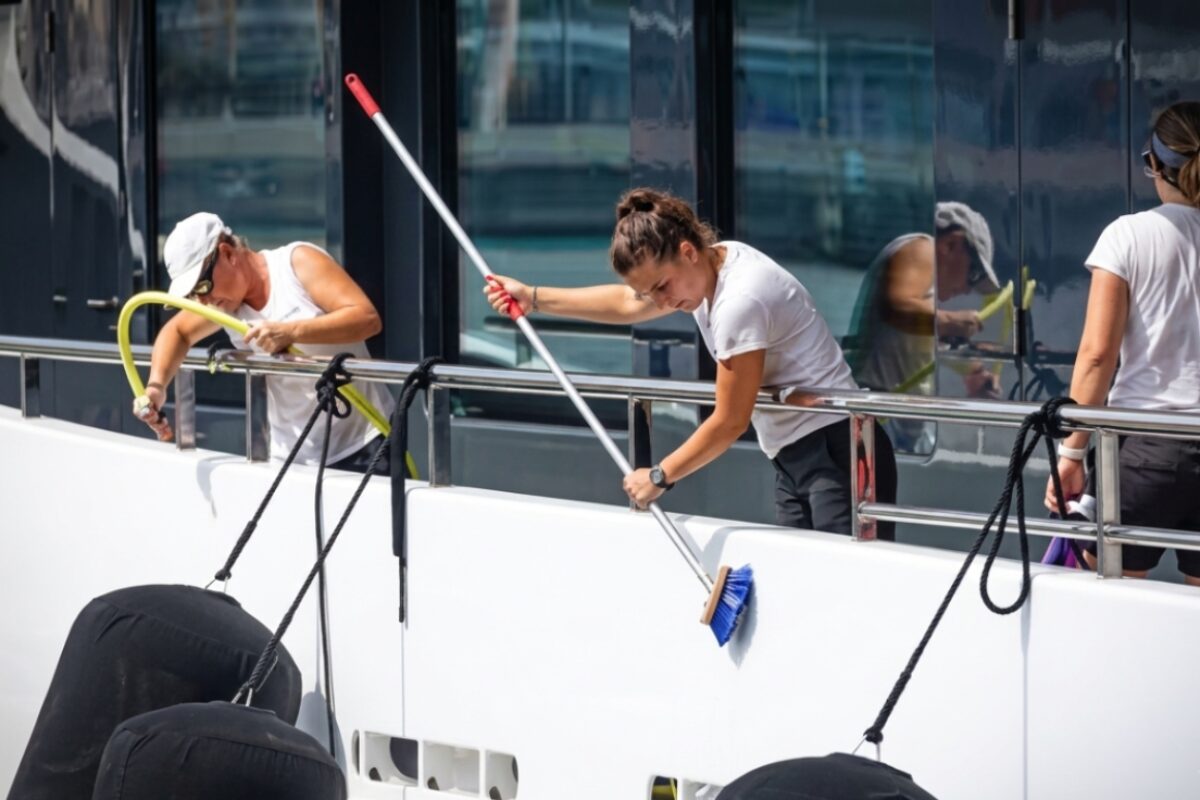
The day begins before the sun rises. Deckhands play a central part onboard, starting with wash downs, deck maintenance, and safety checks that keep the yacht presentable and ready for service.
Every square inch of stainless steel and glass is meticulously dried with chamois leathers to prevent water spots before the guests wake up.
Mid-Day Maintenance and Water Sports
09:00 AM – 02:00 PM
Once guests finish breakfast, deckhands pivot to active guest operations. This includes launching jet skis, setting up beach gazebos, driving guest transfers, and preparing water sports equipment for water sports activities. When guests are off the boat, the crew transitions to superyacht exterior maintenance tasks, including basic maintenance such as scrubbing teak decks, polishing metal fittings, and managing onboard waste systems.
The Evening Wind-Down and Turn-Up
04:00 PM – 09:00 PM
As the sun sets, the crew prepares the exterior spaces for evening entertainment. Deckhands dry down the decks from afternoon swimming, set up outdoor bars, clear guest towels, and position exterior furniture cushions perfectly.
Working as a deckhand also means you may work long hours during busy charters, with long hours being a normal part of the rhythm on board.
Night Security and Perimeter Lock
09:00 PM – Midnight
The final shift involves securing the vessel’s exterior perimeter for the night. This includes lifting swim platforms, checking mooring line tensions, covering exterior electronics, and handing over responsibilities to the designated night watchstander.
Deckhands also work closely with other crew members while keeping watch and reporting upward through roles such as lead deckhand, Bosun, or First Mate, where applicable.
What technical maritime duties must a deckhand perform during boat operations?
Beyond aesthetic cleaning, the deck department handles critical technical operations that keep the vessel safe during voyages and port maneuvers.
These deckhand duties sit within the wider maritime industry, where crew may work on many vessels, from coastal vessels to an ocean-going vessel, a cargo ship, or a container ship, typically under the supervision of the vessel’s deck officers.
Line Handling and Mooring Procedures
During docking, undocking, and anchoring, deckhands provide vital physical coordination.
You will be responsible for managing heavy, high-tension mooring lines, operating electric windlasses (anchor winches), and deploying massive protective fenders along the hull side.
Precision and clear radio communication with the bridge team are mandatory to prevent expensive structural damage to the yacht or the dock.
Tender Operations and Guest Shuttles
One of the most rewarding aspects of the role is tender driving and water sports crew jobs. Tenders are smaller support boats used to transport guests from an anchored superyacht to private beaches, remote docks, or shore excursions.
Deckhands act as professional coxswains, driving these high-speed support vessels safely, smoothly, and stylishly while providing excellent customer service.
Water Sports and Toys Management
Modern superyachts carry extensive inventories of marine recreational equipment, commonly called “toys.” Deckhands are responsible for launching, recovering, cleaning, and fueling jet skis, Seabobs, paddleboards, and massive inflatable slides. You will also look after guest safety while they use this equipment, often acting as a rescue swimmer or spotter.
Bridge Watchkeeping Support
When the yacht is underway at night or crossing oceans, deckhands take on formal maritime watchkeeping duties on yachts. Standing watch on the bridge alongside a licensed officer means acting as a lookout, monitoring radar systems for traffic, watching for floating hazards, and ensuring the vessel remains safely on its navigation track.
How do a deckhand’s duties shift between guest trips and shipyard periods?
A deckhand’s professional focus splits cleanly into two entirely different operational modes:
- The Intense Charter Grind: When owners or paying charter guests are onboard, your world centers on flawless presentation, guest safety, absolute discretion, and immediate service. The hours are long, the pressure is high, and your maintenance tasks must be done invisibly without disrupting the guest experience.
- The Technical Shipyard Maintenance Period: During the winter refit or shipyard periods, guests are completely absent. The yacht transitions into a heavy maintenance zone. The deckhand’s uniform changes from a polo shirt to protective overalls. You will transition into industrial tasks, including sanding wood, stripping old varnishes, grinding away rust, painting, and assisting shore-side contractors with complex technical overhauls. Similar to many commercial deckhand jobs, the work pattern shifts with the vessel’s operating cycle. STCW certification is required for ocean-going Deckhands who stand watches or work during offshore passages.
What specific skills and personal traits are essential in a deckhand job description for high success?
To thrive in the exterior department, you must possess a specific blend of physical capability and psychological resilience, and deckhand jobs can vary significantly by vessel type and season. The essential skills for a green deckhand extend far beyond basic physical labor:
- Extreme Attention to Fine Detail: Elite captains want crew members who notice a single salt smear on a windowpane or a misplaced deck chair cushion from across the deck.
- Physical Stamina and Sun Resilience: You must be capable of standing, lifting, and working on your feet for 12 to 14 hours a day, often in intense tropical heat and high humidity. Deckhands can earn between $24,000 and $54,000 annually, depending on the vessel, experience, and sector.
- Strong Teamwork and Shared Living Dynamics: Maintaining a positive attitude while living in tight crew quarters and working closely alongside the same small team is essential for onboard harmony and long-term career growth.
- Proactive Work Ethic: The best green deckhands do not wait to be told what to do. They naturally find areas that need cleaning, organizing, or polishing the moment their current task is complete.
Why is securing certified safety training the absolute first step to entering an entry-level position as a deckhand?
You cannot safely or legally land a position on a superyacht without verified professional qualifications. Captains are responsible for multi-million-dollar assets and guest safety; they cannot legally hand over mooring lines or the keys to a high-speed tender to an uncertified beginner.
Your entry into the industry often starts with an entry-level position, and to become a deckhand, you need to complete mandatory international safety modules.
Booking your STCW course in Cape Town ensures you cover essential safety topics, including Marine Firefighting, Sea Survival, and First Aid, which are legal requirements for working at sea.
Gaining your STCW basic safety training compliance before you leave home shows captains you are a serious, safe, and professional applicant, especially when applying for your first job.
To truly stand out in a competitive job market, combining your safety training with specialized deck competency modules or a formal maritime training program gives you a massive advantage.
Training in practical skills like professional line handling, yacht maintenance, and tender operations means you require minimal onboarding time.
This qualification edge makes you an immediate asset to any captain, helping you secure a yacht deckhand salary and career path opportunity much faster than untrained candidates.
Over time, sea time and more certifications can open the way to Bosun or even Captain, supporting long-term career growth.
Frequently Asked Questions
Do deckhands need to know how to drive a boat before getting hired?
You do not need prior experience driving large boats to get hired as a green deckhand. While having basic boating experience is helpful, introductory deckhand training modules will teach you the core mechanics of tender handling, docking maneuvers, and marine safety rules.
Once on board, the senior crew will supervise your driving until you build local port competence.
Is the work of a superyacht deckhand dangerous?
Working at sea carries real risks, particularly when handling high-tension mooring lines, operating heavy anchor winches, or launching tenders in rough seas. However, the industry manages these risks through strict safety rules and regular drills.
Completing your mandatory safety courses ensures you understand these hazards and know how to operate safely on deck.
Do yacht deckhands get to travel and explore the ports the boat visits?
Yes, travel is a major benefit of the job, but your ability to explore depends entirely on the yacht’s schedule. During intense guest trips, your time will be completely dedicated to onboard duties.
However, when the vessel is between trips, anchored in a secure bay, or docked for standard maintenance, deckhands regularly get time off to explore local ports, beaches, and towns.
What is the difference between a deckhand and a stewardess on a yacht?
The primary difference lies in their operational departments. Deckhands belong to the exterior department, focusing on structural maintenance, paint care, water sports, tender driving, and navigation safety.
Stewardesses belong to the interior department, managing guest services, fine dining, mixology, housekeeping, and laundry management inside the vessel.
On larger commercial vessels, the deck department is separate from the engine department, while on yachts, responsibilities can feel more cross-functional day-to-day.
Can women work as deckhands on superyachts, or is it a male-dominated job?
Absolutely. While the exterior department has historically been male-dominated, the modern superyacht fleet actively encourages and employs female deckhands. Captains prioritize hard work, technical competence, attention to detail, and a positive team attitude over gender, making the deck department an excellent option for any driven candidate.
Final Thoughts
An entry-level deckhand role is a demanding, fast-paced position that rewards hard physical work and attention to detail with excellent financial savings and global travel.
By mastering your daily maintenance routines, keeping an eye on safety, and building your technical skills, you can quickly turn a junior deckhand role into a long-term maritime career.
Before heading overseas to look for work, make sure you hold the professional certifications that captains look for.
Contact Certified Training today to speak with an expert advisor, and find the right course track to launch your career on deck.