
There’s a moment on every yacht when the difference between “good” and “great” shows up in something tiny. It’s the hose that gets shut off without being asked, the lights that don’t stay on in empty cabins, or the tender run that gets combined because someone planned.
None of that looks like a sustainability campaign, but it’s exactly what sustainability is: good habits, done consistently. When we stack enough of those habits together, we start building a greener future without making life onboard feel like a punishment.
Crew members play a crucial role and a vital role in reducing carbon emissions and addressing climate change through these daily habits. Their commitment to sustainable practices is essential for minimizing the maritime industry’s environmental impact and supporting a greener future.
The truth is, most yachts don’t need a dramatic overhaul to cut their footprint. We need clear routines that still work when the day goes sideways, the itinerary changes, and guests want everything right now.
When the sustainable option becomes the normal option, we stop relying on willpower and start relying on systems. That’s when sustainability stops feeling like “extra” and starts feeling like professional standards.
Introduction to Environmental Sustainability
Environmental sustainability is at the heart of the maritime industry’s responsibility to protect our oceans and the diverse marine life that depends on them. Every voyage, every operation, and every decision made onboard contributes to the industry’s overall environmental footprint.
From greenhouse gas emissions and marine pollution to the challenges of waste management, the impact is significant, but so is the opportunity for positive change.
By embracing sustainable practices and innovative technologies, the maritime industry can dramatically reduce its environmental impact and move toward a more sustainable future.
Crew training programs are essential in this transition, equipping crew members with the knowledge and skills needed to adopt eco-friendly practices and make informed decisions that benefit both the vessel and the environment.
When the crew understands the importance of environmental sustainability, they become champions for change, reducing fuel consumption, minimizing waste, and safeguarding marine ecosystems for future generations.
The path to a more sustainable future starts with environmental awareness and a commitment to continuous improvement at every level of the industry.
What Does a Greener Future Mean for the Maritime Industry?
In plain terms, a greener future means we do less damage while still delivering safe, high-performance operations. As the maritime industry is a cornerstone of global trade, it has a significant responsibility to address environmental issues such as pollution, emissions, and marine conservation.
We reduce emissions where we can, we waste less, and we handle water, chemicals, and garbage with more care. It’s not about perfection or guilt trips; it’s about running smarter so we leave fewer problems behind.
For the superyacht world, it also means proving we can offer luxury without the unnecessary waste that used to come with it.
The challenges are real and familiar: fuel burn, generator hours, plastic packaging, food waste, chemical runoff, and poor disposal practices. When systems are loose, waste sneaks in everywhere because convenience wins the day.
When systems are tight, the yacht runs cleaner, calmer, and more predictably. Achieving operational efficiencies not only ensures compliance with environmental regulations but also leads to cost savings and reduced environmental impact.
A greener maritime industry is really just a better-run industry, with fewer leaks, fewer shortcuts, and fewer “we’ll deal with it later” moments.
Why Is the Crew Central to Creating a Greener Future?
A yacht can install advanced equipment and still waste resources if the human side doesn’t match the hardware. The footprint isn’t shaped by one big decision; it’s shaped by a hundred small ones made every day by deck, interior, galley, and engineering.
We decide whether procedures are followed when we’re tired, whether waste gets sorted properly when we’re rushed, and whether the easy option becomes the default. That’s why crew sustainability responsibilities matter so much: we’re the difference between a policy and a reality.
This isn’t about blame; it’s about influence. Crew behaviours are the switchboard for everything the yacht consumes and disposes of, from fuel to fresh water to chemicals. If we want sustainable superyacht operations, we need routines that don’t depend on one “eco person” onboard.
Crews must understand legal requirements and international standards for sustainability, ensuring compliance with regulations and fostering a culture of environmental responsibility. The strongest yachts build an onboard culture where everyone protects standards the same way we protect safety.
The Importance of Environmental Awareness
Environmental awareness is the foundation of effective sustainability in the maritime industry. When crew members understand how their daily actions affect the marine environment, they are empowered to make choices that reduce the vessel’s environmental footprint.
Proper waste management practices, such as minimizing food waste, sorting recyclables, and ensuring environmentally sound recycling, are crucial for lowering the industry’s overall impact.
Awareness also extends to the handling of hazardous waste, which, if mismanaged, can introduce harmful substances into the ocean and threaten both marine life and human health.
The International Maritime Organization (IMO) plays a critical role in setting regulatory requirements and promoting best practices to reduce marine pollution. By staying informed and prioritizing environmental awareness, crew members help ensure compliance with international maritime standards and contribute to a more sustainable future.
Ultimately, a culture of awareness leads to smarter decisions, cleaner operations, and a healthier marine environment for all.
How Do Crew Turn Sustainability Into Daily Habits Onboard?
Sustainability sticks when it fits into the rhythm of a normal day. We don’t need long meetings or thick manuals; we need simple habits that are easy to repeat and hard to forget.
A quick “green routine” works best when it’s built into existing workflows, like end-of-shift checks, service prep, and engine room rounds. If it only works on quiet days, it won’t work at all.
Ongoing education is essential to reinforce these sustainable habits, ensuring crew members stay updated with best practices and evolving regulations.
One of the easiest ways to keep momentum is a two-minute daily sustainability huddle. We pick one priority for the day (for example: “combine tender runs” or “full laundry loads only”) and one reminder that prevents drift (like “refill stations stocked before service”).
We also rotate a weekly “sustainability lead,” so it becomes a shared responsibility, not a side hobby for one person. The lead’s job isn’t to police everyone; it’s to keep the small systems visible and moving.
Here’s a practical green routine by the department that holds up under pressure. Careful management is required to ensure these routines are effective and contribute to optimizing fuel consumption and operational efficiency:
- Deck: Combine tender runs, plan ops in batches, and treat spill-prep as standard every time we fuel or transfer.
- Interior: Use refillables by default, dose chemicals correctly, and schedule laundry like a plan, not a reaction.
- Galley: Track waste daily, provision with precision, and repurpose safely for stocks and crew meals.
- Engineering: Watch generator load, tighten HVAC discipline, and track fuel, power, and water trends like performance data.
How Can Deck Crew Reduce Environmental Impact During Operations?
The deck is a major lever because it controls movement, water use, and many of the everyday consumables that quietly add up. The fastest improvements come from planning: fewer unnecessary trips, better staging, and fewer last-minute scrambles. When the deck runs smoothly, we burn less fuel and waste less time, and the yacht simply feels more controlled. A greener approach on deck should feel like smarter seamanship, not a new set of rules.
Tender runs are the obvious place to start because small decisions can double or triple trips without anyone noticing. We cut runs by batching errands, staging guest items properly, and using a simple “next run” list on a whiteboard so we’re not reacting to one request at a time.
We also reduce phantom trips with a short pre-departure check: bags, toys, sunscreen, snorkel sets, and whatever else tends to trigger the classic “we forgot one thing.” Guests experience this as better service because fewer trips usually mean fewer delays.
Fueling and transfers are another high-stakes area where routine matters. Managing sulfur emissions, sulfur oxides, and nitrogen oxides is essential to comply with international environmental regulations, such as the IMO Sulphur Cap, and to reduce air pollution from maritime operations.
Spill prevention works best when it’s automatic: absorbents ready, fittings checked, and one person responsible for watching the process without distractions. Cleaning products matter too, but the bigger win is correct dilution and use, because overuse doesn’t clean better, and it creates more runoff and waste. The housekeeping on a superyacht must know how to manage it.
Add anchoring choices and water activities to the mix, and the deck becomes a key protector of seabeds, marine life, and local environments simply by doing the basics well.
How Can Interior Crew Make Guest Service More Sustainable Without Reducing Quality?
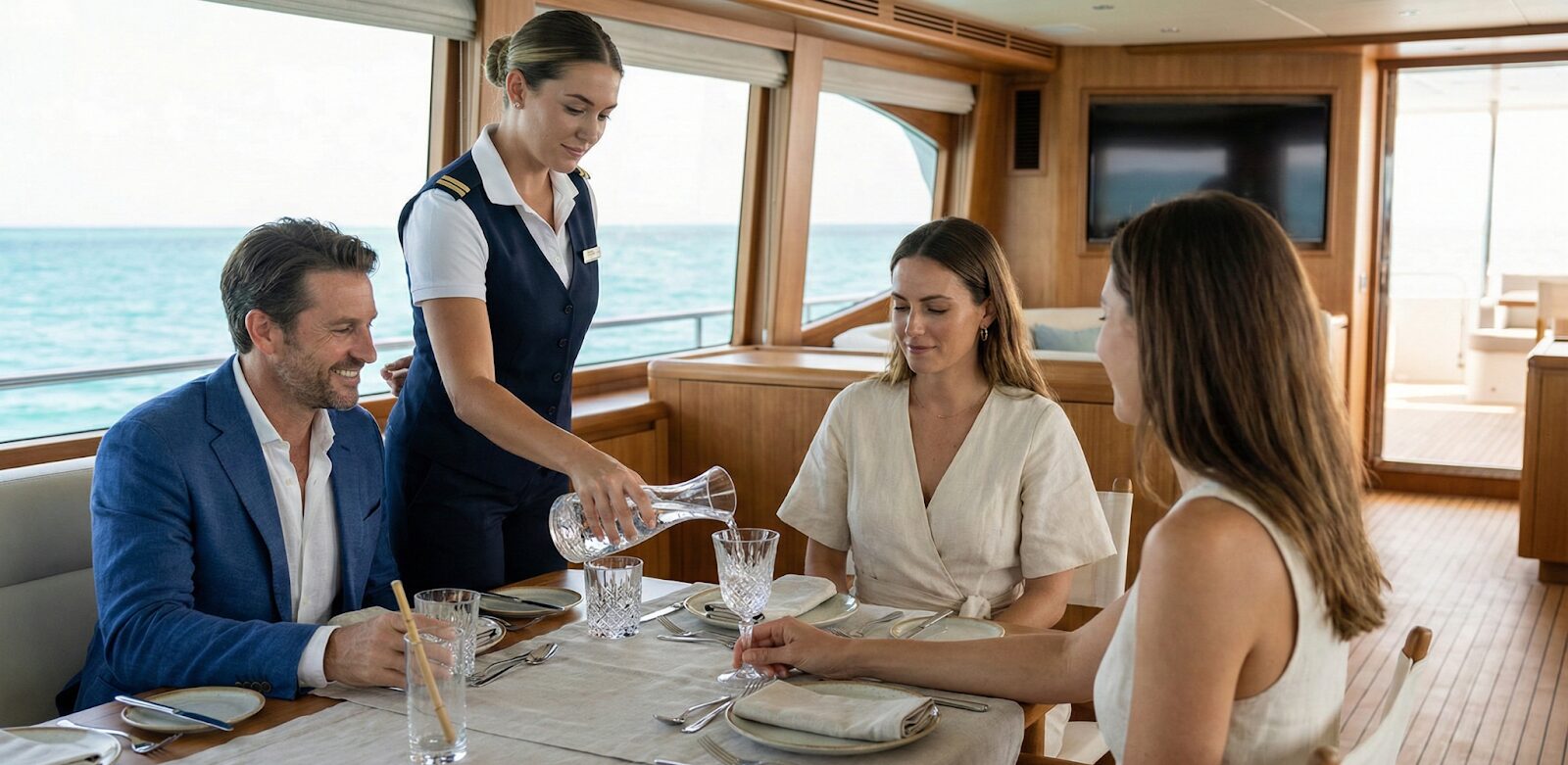
Interior has a special challenge: we’re running guest comfort, and comfort can’t be negotiable. The good news is that most sustainable changes can be made invisible, or even better, made to feel premium.
Guests rarely miss disposable items if the replacement looks intentional, consistent, and high-end. Our job is to make eco-friendly onboard practices feel like a natural part of excellent hospitality.
It is important to focus on sustainable practices, particularly those that can be implemented without compromising guest comfort.
Refillables are a great example when they’re done properly. Refillable water setups, toiletries, and cleaning systems can look more curated than single-use minis, but only if presentation is tidy and restocking is effortless behind the scenes.
We need a clear storage plan, a restock routine, and responsibility assigned so the system doesn’t collapse into “we ran out, grab the disposable version.” When refillables are easier than single-use, everyone wins.
Laundry is another big driver of water, power, and chemical use, and it often runs on autopilot. We cut waste by scheduling laundry intelligently, running full loads, and using lower temperatures where suitable without compromising standards.
These practices help minimize waste by reducing unnecessary resource consumption and supporting more sustainable operations. We also reduce chemical use through correct dosing and smarter product choices, because too much product usually means more rinsing, more time, and more residue.
A yacht that smells cleaner with fewer chemicals is not just greener, it’s more pleasant to live and work on.
How Can Galley Crew Reduce Food Waste and Lower the Carbon Footprint?
The galley can save a yacht a surprising amount of waste, and not just because food is expensive. Food waste also includes wasted refrigeration, transport, packaging, and effort from provisioning to storage.
We don’t need to lower quality to improve sustainability; we need tighter planning and better visibility. When the galley is precise, the yacht feels more professional, and costs drop quietly in the background.
A quick daily food-waste log is one of the simplest tools that actually changes behaviour. We note what was wasted, roughly how much, and why, and we keep it easy enough that it won’t get abandoned after a busy day.
Patterns show up fast: over-ordering certain produce, poor rotation, unrealistic portion estimates, or menu decisions that don’t match guest habits. Once we see the pattern, we fix the system instead of blaming the day.
Provisioning is where big wins live, especially when “just in case” buying becomes the default. We tighten forecasting, improve storage rotation, and plan menus that use overlapping ingredients, so we’re not buying ten niche items that expire after one dinner.
Repurposing helps too when it’s planned and safe: stocks, sauces, staff meals, and approved second-use items can be built into the flow without feeling like leftovers. When possible, seasonal and local sourcing reduces the footprint and often raises quality, which means sustainability can actually improve the guest experience.
Reducing food waste and ensuring proper management of cargo residues, in line with MARPOL Annex V regulations, provides significant environmental benefits. These practices help prevent marine pollution, support biodiversity, and contribute to the long-term health of marine ecosystems.
How Can the Engineering Crew Improve Energy and Fuel Efficiency Day-to-Day?
Engineering is where energy efficiency either becomes real or becomes a nice idea. The biggest improvements often come from steady discipline: generator loading, maintenance, HVAC management, and tracking trends instead of guessing.
When systems are run efficiently, the yacht performs better, equipment lasts longer, and the crew deals with fewer emergencies. In other words, “green” often looks like “well-run.”
Improved engineering practices not only boost efficiency but also enhance environmental performance by minimizing waste and reducing the yacht’s overall environmental impact. A good yacht engineering course can be helpful to improve efficiency.
Generator efficiency is a common hidden drain because low loads waste fuel. We improve this by monitoring load, planning high-demand tasks, and avoiding inefficient running patterns where possible.
Maintenance keeps efficiency honest because clogged filters, neglected systems, and small mechanical issues quietly increase consumption and risk. When maintenance is proactive, sustainability becomes a natural outcome rather than a separate effort.
HVAC is another major energy sink, and it’s easy to waste without noticing. We control it through zoning, sensible setpoints, door discipline, and routine checks so the system isn’t fighting itself all day.
Comfort stays high when the system is stable, not when it’s overworked. Tracking fuel burn, generator hours, power draw, and water production turns efficiency into something we can improve month after month instead of something we argue about in the crew mess.
How Do Crew Improve Waste Management Systems Onboard?
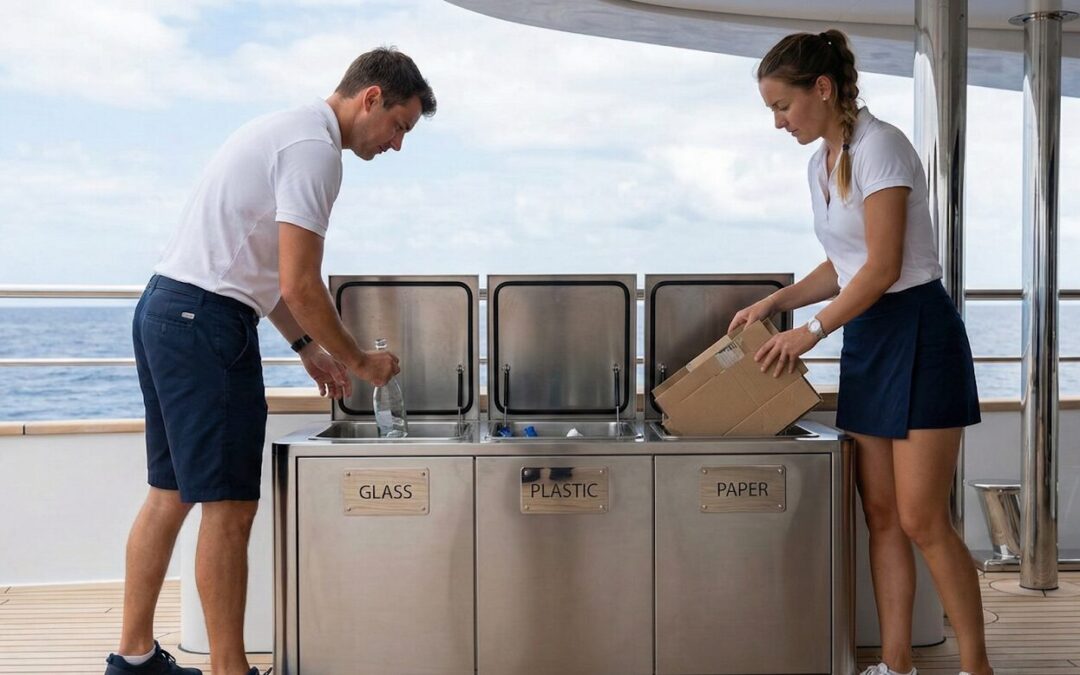
Waste management works when it’s simpler to do the right thing than the wrong thing. If sorting is confusing, inconvenient, or inconsistent, contamination becomes normal, and recycling becomes pointless.
We design waste flow like we design service flow: clear labels, consistent placement, and a routine everyone can follow even when they’re tired. When the system is easy, compliance rises without drama.
The practical fix is labelled stations that work for both crew and guests, not just a hidden sorting corner that nobody wants to use. We define what goes where: plastics, glass, cans, food waste, hazardous waste, and hazardous materials, and we keep the labels consistent across the yacht.
Proper handling and disposal of hazardous materials, such as oils and chemicals, is essential for environmental protection and compliance with international regulations like MARPOL. A weekly waste check helps too, because it shows what’s filling up fastest and where contamination is happening.
Once we have that information, we can adjust purchasing, service habits, and storage to reduce waste at the source.
How Do Crew Reduce Plastic Use Without Creating Extra Work?
Plastic reduction fails when it creates clutter, because clutter always loses to convenience. The goal is fewer plastics and smoother operations, not a pantry full of random “eco replacements” that no one can find.
The simplest policy is refillable by default for water, soaps, and cleaning bottles, because default behaviour drives outcomes. When refillables are standard, plastic drops without constant reminders.
Adopting sustainable technologies, such as electric tenders for crew and guest transport, further reduces the yacht’s environmental footprint by providing eco-friendly alternatives to traditional options.
After that, we tackle the repeat offenders that quietly pile up: mini toiletries, cling wrap, plastic cups, and straws. The key is pairing replacements with a proper storage home for reusables, so we don’t create chaos in the process. If reusables don’t have a place, they become clutter, and clutter sends people right back to disposables. A monthly “top five plastics to remove next” review keeps progress moving in small, manageable steps.
Green Initiatives and Technologies
The maritime industry is rapidly evolving, with green initiatives and advanced technologies leading the way toward a more sustainable future.
One of the most impactful changes is the adoption of alternative fuels, such as low-sulfur fuels, which significantly cut greenhouse gas emissions and reduce the release of harmful pollutants into the atmosphere and ocean.
Crew members play a key role in implementing these changes, from monitoring fuel consumption to ensuring proper handling of new fuel types.
Digital tools are also transforming operations, with energy efficiency software helping crews optimize routes, manage power usage, and reduce waste. The integration of sustainable materials, like solar panels and wind turbines, further decreases reliance on fossil fuels and lowers the vessel’s environmental footprint.
Water usage and wastewater management systems are being upgraded to protect marine ecosystems, ensuring that discharges are minimized and treated responsibly.
By embracing these eco-friendly technologies and practices, the maritime industry is not only reducing its environmental impact but also setting a new standard for operational excellence and stewardship of the seas.
How Can Crew Measure Sustainability So It Doesn’t Become Guesswork?
If we don’t measure, we guess, and guessing turns sustainability into opinion. A few basic numbers keep it grounded and make improvements obvious.
We can track weekly indicators like fuel burn trends, generator hours, and average load, water production and usage, waste volume by category, and provisioning waste or spoilage. These are simple enough to maintain, but meaningful enough to guide real decisions.
The monthly review is where we turn data into action instead of letting it sit in a spreadsheet nobody reads. We ask what improved, what didn’t, and what we’re changing next month, then we assign responsibilities so actions don’t disappear.
Recognition matters because it creates buy-in without turning sustainability into policing. When people feel ownership and get credit for progress, the habits stick.
How Do Crew Influence Guests to Support a Greener Future Without Conflict?
Guests aren’t onboard for a lecture, and we shouldn’t try to turn them into a captive audience. What guests do respond to is a yacht that runs smoothly, feels thoughtful, and makes the ocean part of the experience rather than something separate.
We use positive framing and design sustainability into service so it feels effortless. If it’s easy, guests follow it without even thinking about it.
We present reusables as premium and intentional, not as “the thing you must do.” We offer options without pressure and keep comfort front and centre, because that’s the point of the charter. When guests ask questions, we keep it simple and focused on outcomes: better comfort, cleaner seas, less waste.
When sustainability feels like a thoughtful upgrade, it usually becomes something guests are happy to support.
What Environmental Regulations Must Crew Follow to Support a Greener Future?
Environmental rules aren’t just paperwork; they’re daily procedures that protect the sea and keep vessels compliant.
At a high level, international frameworks guide how garbage is handled, how pollution is prevented, and how certain activities are logged and controlled onboard.
Environmental organisations play a key role in shaping these regulations and promoting sustainable yachting by encouraging eco-certification, supporting marine conservation, and driving industry-wide best practices. Regulations only work when we apply them consistently, which is why routine matters so much. If we treat compliance as something we do “sometimes,” we create risk for the yacht and for the environment.
Crew responsibility shows up in the basics: proper waste handling, preventing discharges, following procedures during transfers and operations, and keeping accurate logs where required.
Cutting corners doesn’t only risk penalties; it risks reputation and access, and those are hard to win back. The simplest way to stay aligned is to treat compliance like safety: non-negotiable, repeatable, and built into daily work. When those routines are solid, sustainability stops being fragile.
How Does Sustainability Create Better Long-Term Careers for Crew?
Green skills are becoming career skills, whether we label them that way or not. Owners and managers want crews who run tight systems, reduce waste, and keep standards high without needing constant reminders.
That makes an environmentally responsible crew easier to place, easier to trust, and more likely to move into better roles over time. Consistency is what separates “good intentions” from real professionalism.
Sustainability also builds leadership habits because it depends on process thinking, accountability, and communication. If we can manage waste streams, chemicals, and energy use, we can manage detail under pressure, exactly what senior roles demand.
These skills travel with us from yacht to yacht, and they age well as expectations rise across the industry. In a world that’s increasingly regulated and scrutinised, future-ready crew are the ones who can prove they run clean operations.
Best Practices for a Greener Future
Achieving a greener future in the maritime industry requires a commitment to best practices that prioritize environmental sustainability at every level. Effective waste management is essential, which means not only sorting and recycling but also reducing waste at the source through smarter provisioning and efficient operations. Lowering fuel consumption through route optimization, regular maintenance, and the use of sustainable materials like solar panels and wind turbines further reduces the industry’s environmental impact.
Environmental awareness must be woven into daily routines, with crew members properly trained to understand and implement eco-friendly practices onboard.
International frameworks, such as the Hong Kong International Convention and other global standards, provide clear guidelines for environmentally responsible operations.
By aligning with these international conventions and ensuring that all crew are properly trained, the maritime industry can work collectively toward net-zero emissions and a healthier marine environment.
These best practices not only protect natural resources but also ensure a more sustainable future for generations to come, reinforcing the industry’s role as a leader in environmental protection and operational excellence.
What Is the Future Role of Crew in Sustainable Maritime Operations?
The future role of the crew will include more tracking, more accountability, and more expectation that sustainability is simply standard operations. We’re moving away from optional good intentions and towards procedures that are built into how each department works.
More technology will arrive onboard, but technology still needs people who understand it, operate it properly, and maintain it consistently. Environmental awareness won’t be a bonus skill for long; it’s becoming part of the baseline.
The biggest shift is cultural. We become long-term stewards, not just operators, because our workplace is the ocean’s living space. The good news is this doesn’t remove the magic of yachting; it protects it.
When we run cleaner operations, we make the industry more defensible, more professional, and more aligned with the sea that makes this work possible.
FAQs
What is the role of the crew in a greener future?
Crew turn sustainability goals into daily action onboard through practical routines. We reduce waste, manage energy and water, and keep operations ocean-safe without sacrificing standards. When these habits are normal, sustainability becomes part of how the yacht runs.
Why are crew members important for sustainability at sea?
Because most impact comes from everyday choices, not one-off decisions. Crew control how systems are used, how waste is handled, and whether procedures are followed when it’s busy. Strong routines make sustainability reliable.
How can the crew reduce environmental impact onboard vessels?
We reduce impact by planning smarter, cutting unnecessary trips, and tightening waste and chemical routines. Refillable defaults, efficient laundry and HVAC habits, and better provisioning are simple wins. The key is making the sustainable option the default.
What sustainability practices are the crew responsible for daily?
Daily practices include switch-off checks, correct chemical dosing, proper waste separation, and disciplined energy and water use. Each department plays a role, from deck operations to galley planning and engineering efficiency. Shared ownership keeps it consistent.
How does crew training support a greener maritime industry?
Training turns good intentions into habits that work under pressure. It creates consistent standards for waste handling, pollution prevention, and efficient operations across departments. Better training means better routines.
What environmental regulations must the crew follow?
The crew follows onboard procedures that support international and vessel-specific requirements, especially those related to waste and pollution prevention. That includes correct sorting and storage, avoiding discharges, and completing required logs where applicable. Consistency matters most.
How does sustainable behaviour benefit crew careers?
It signals professionalism, discipline, and readiness for higher standards. Managers value crews who reduce waste while maintaining a premium guest experience. These habits also build leadership skills that support progression.
Conclusion
The greener future we talk about isn’t waiting for a refit or the next big piece of equipment. It’s built into everyday moments: how we plan, how we clean, how we store, how we run systems, and how we follow procedures when it’s busy.
That’s why the crew is central, because we’re the ones who turn intention into reality. When the routines are right, the footprint drops without the operation feeling harder.
If we want sustainability to last, we keep it simple, measurable, and built into culture. We share ownership, we track what matters, and we reward the habits that protect the ocean and improve operations.
This is environmental responsibility at sea done properly: not as a performance, but as a professional standard. When we do it well, we protect the sea while building stronger, more future-ready careers onboard.